English
Rotary Brush Selection: RPM, Diameter and Mounting Details
Created on 03.16
Finding the right equipment for industrial scrubbing can seem overwhelming at first. We aim to assist you in selecting a top-notch industrial cleaning tool for your needs. Our team understands the importance of choosing the right gear for safe and effective results.
rotary brush
It's crucial to match your equipment with your machine. We offer the technical information you need to streamline your workflow and save time. The right rotary brush can effectively remove tough grime while protecting your surface.
Choosing the right hardware for your shop is a complex task. Our experts are here to guide you through finding the best parts for your work. This ensures your machine operates at its best and remains safe all day long.
Key Takeaways
- Verify the equipment RPM rating before use.
- Check the outer diameter size for clearance.
- Confirm the mounting hole type for your tool.
- Match the fill material to the specific task.
- Ensure compatibility with your current machinery.
- Prioritize safety during every stage of operation.
Understanding Rotary Brush Applications and Industries
Rotary brushes are key in many fields, from cleaning to making products. They are used in different places, each with its own needs and problems. Knowing where they are used helps pick the best rotary brush for the task.
They act as power scrubbers in many areas, offering a good cleaning solution. Their role as a rotary brush attachment on machines makes them useful in many sectors.
Common Industrial Uses for Rotary Brushes
Construction, manufacturing, and warehousing often use rotary brushes. They are used for:
- Cleaning big surfaces and machines
- Getting surfaces ready for paint or finish
- Smoothing out metal edges
Choosing the right brush is key. This means picking the right bristle material and density for the job.
Floor Cleaning and Surface Preparation Applications
Rotary brushes are great for cleaning floors and getting surfaces ready. They are used for:
- Scrubbing floors clean
- Preparing concrete for sealing or coating
- Keeping equipment and machines clean
The right brush size and speed are important. They affect how well the brush works and how long it lasts.
Manufacturing and Deburring Operations
In making things, rotary brushes are crucial for deburring. They remove sharp edges and blemishes from parts. The bristle material and brush design are important for the finish.
We look at the material being deburred, how much deburring is needed, and the machine used. This helps pick the best rotary brush for the job.
Critical RPM Considerations for Rotary Brush Performance
Getting the right RPM for a rotary brush is key to good cleaning. The RPM, or revolutions per minute, greatly affects how well it cleans and how safe it is.
How RPM Affects Cleaning Efficiency and Safety
The RPM of a rotary brush impacts its cleaning power. A higher RPM can clean better but might damage surfaces or the brush. A lower RPM is safer but might not clean as well.
Balancing RPM with the task at hand is crucial for the best results. For tough cleaning, you might need a higher RPM. But for delicate surfaces, a lower speed is better.
A detailed close-up of a rotary brush system designed for industrial cleaning applications. In the foreground, focus on the rotating brush bristles, showcasing their various textures and materials, such as nylon and steel. The middle ground features the central hub with clear visible components, highlighting the motor and RPM gauge. In the background, a clean workshop environment, softly lit by overhead fluorescent lights, enhances the technical atmosphere. Use a slightly tilted angle for a dynamic perspective, emphasizing the brush's functionality. The overall mood should convey precision and professionalism, ideal for discussing critical RPM considerations in rotary brush performance. No text or branding elements are included.
Recommended Operating Speed Ranges by Brush Type
Each type of rotary brush works best at certain RPMs. For example, wire brushes need higher RPMs than brushes made of synthetic or natural fibers.
Brush Type | Recommended RPM Range |
Wire Brush | 1,000 - 3,000 RPM |
Synthetic Brush | 500 - 1,500 RPM |
Natural Fiber Brush | 300 - 1,000 RPM |
Matching RPM to Brush Material and Surface Conditions
It's important to match the RPM to the brush and the surface. For example, a wire brush might need a high RPM for hard surfaces. But a softer surface might need a lower RPM and a softer brush.
Variable Speed vs. Fixed Speed Systems
Variable speed systems allow you to adjust the RPM for different tasks. They offer flexibility but might not be as consistent as fixed speed systems. Fixed speed systems are designed for specific tasks and provide consistency but are less adaptable.
The choice between variable and fixed speed systems depends on the specific needs of the application. This includes the surface being cleaned and the desired level of cleanliness.
Selecting the Right Rotary Brush Diameter
The diameter of a rotary brush is very important. It impacts the brush's effectiveness and ease of use. The brush size can affect how well it cleans and how easily it maneuvers in tight spaces.
Standard Diameter Sizes and Their Applications
Rotary brushes are available in various sizes for different jobs. Smaller diameters are ideal for detailed work and reaching confined areas. Larger diameters are more suitable for cleaning large areas quickly.
- Small diameters (less than 6 inches) are perfect for detailed cleaning and getting into tight spots.
- Medium diameters (6-12 inches) are good for many cleaning tasks.
- Large diameters (over 12 inches) are best for heavy-duty cleaning and big areas.
Surface Area Coverage and Productivity Considerations
The size of a rotary brush affects how much area it can cover. Bigger brushes can clean more in less time. They're great for floor scrubbers and cleaning equipment in big places.
But, using a bigger brush might make it harder to move around. You need to think about how you'll use it and what you need to clean.
How Diameter Affects Cleaning Speed and Power Requirements
Bigger brushes clean faster but need more power. Smaller brushes clean slower but are more precise and need less power.
- Larger diameter brushes clean faster but need stronger motors.
- Smaller diameter brushes are precise and work with less powerful equipment.
Working Around Space Constraints and Accessibility Limitations
In tight spaces, the brush's diameter is very important. Smaller brushes are key for getting into tight spots.
Choosing the right size ensures your cleaning tool works well, even in the toughest spots.
Mounting Options and Attachment Systems
Choosing the right mounting system for your industrial rotary brush is key for top performance. The mounting system impacts the brush's use, efficiency, and effectiveness in different settings.
Different industries need different mounting setups to fit with existing equipment smoothly. Let's look at the various mounting options for rotary brush machines.
Arbor Hole Mounting Specifications and Standards
Arbor hole mounting is a common way to attach rotary brushes to machines. It involves a machined hole in the brush fitting onto the machine's arbor. The specs and standards for this mounting vary by machine and brush maker.
When picking a rotary brush with arbor hole mounting, make sure the hole size matches the machine's arbor. Stick to standard sizes and tolerances for a secure fit.
Quick-Change Mounting Systems for Efficiency
Quick-change mounting systems boost efficiency by letting you swap out brushes fast, without tools. They're great for high-output settings where downtime is a big issue.
The quick-change system uses a special mechanism made by the manufacturer. It ensures the brush fits right with the machine. This saves time and cuts down on labor costs for brush changes.
Shaft-Mounted Rotary Brushes and Direct Drive Options
Shaft-mounted rotary brushes attach directly to the machine's shaft. This setup is strong and simple, often needed for high torque and direct drive.
Direct drive options remove the need for extra parts. This reduces mechanical failure risks and boosts system efficiency.
Universal Mounting Adapters and Compatibility
Universal mounting adapters let one rotary brush work with various machines or setups. They're handy in places where equipment changes or when updating old gear to use new brushes.
When picking universal adapters, check they work with both the brush and the machine. This ensures a good fit and function.
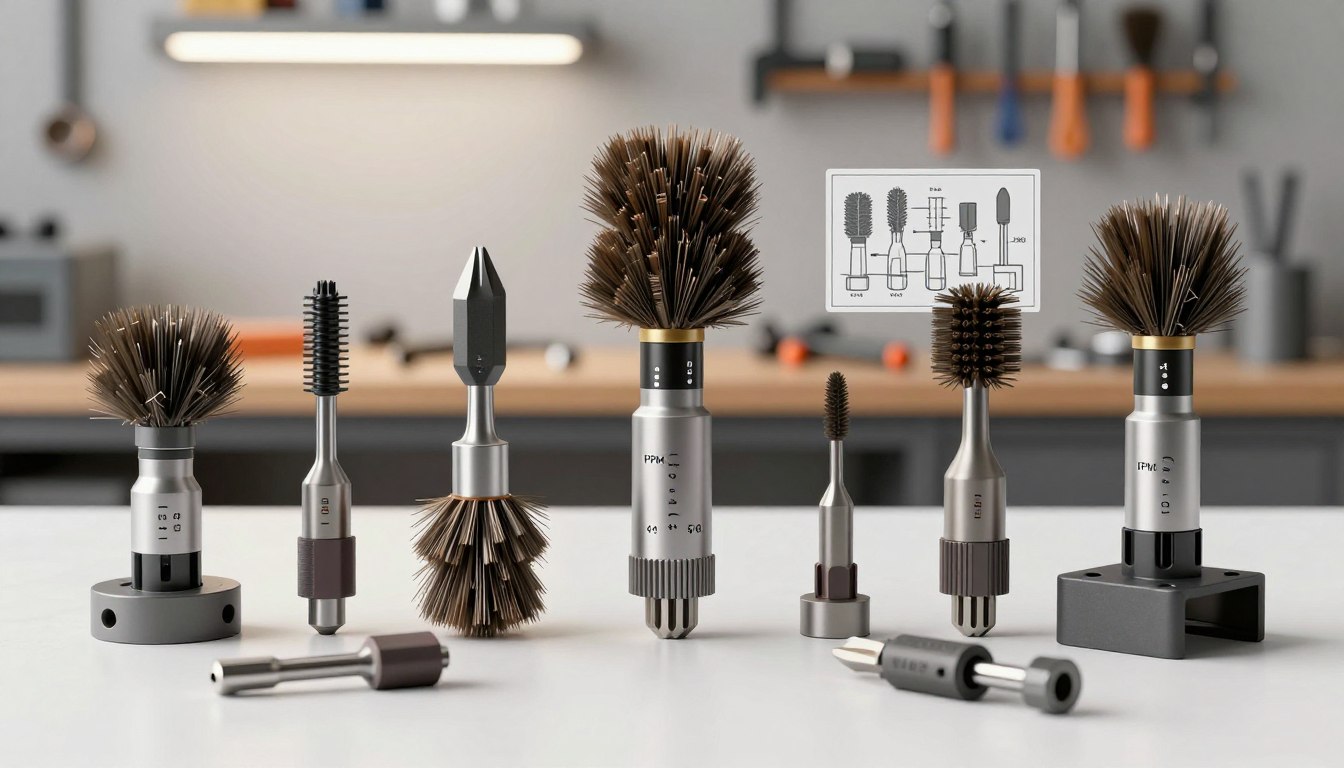
A detailed illustration of various rotary brush mounting options, showcasing different attachment systems. In the foreground, feature a close-up view of several rotary brushes with diverse diameters and RPM settings, alongside different mounting hardware like brackets and adapters. The middle layer includes a workbench cluttered with tools, parts, and a small diagram highlighting the different mounting techniques. In the background, incorporate a softly lit workshop environment, with tools hanging on the wall and a gentle glow from overhead lights to create a professional, industrious atmosphere. Use a macro lens effect to emphasize the intricate details of the brushes and mounting systems, while maintaining a clean, minimalistic style without any text or distractions.
Bristle Materials and Fill Configurations
The type of bristle and how they're filled are crucial for cleaning. We must think about these carefully for the best results in different situations.
Choosing a rotary brush means knowing about the bristle materials. Each one is special and fits certain tasks better.
Wire Bristle Options for Heavy-Duty Scrubbing
Wire bristles are great for tough scrubbing because they're strong and clean well. They're often used in places where dirt is hard to remove. Wire bristles can handle high RPMs, making them perfect for hard jobs.
Synthetic Bristles for Delicate Surfaces
Synthetic bristles are best for gentle cleaning on sensitive surfaces. They're used where keeping the surface smooth is important. These bristles come in different stiffness levels, making them versatile for various cleaning tasks.
Natural Fiber Brushes and Their Advantages
Natural fiber brushes are soft and won't scratch surfaces easily. They're good for woodworking or cleaning delicate equipment because they're gentle.
Understanding Bristle Density and Stiffness Grades
Bristle density and stiffness are key to a brush's cleaning power. A denser brush cleans more aggressively. Stiffness affects how the brush works on surfaces. Knowing these helps pick the right brush for any task.
By looking at bristle material, density, and stiffness, we can make our rotary brush or power scrubber work better for many tasks.
Matching Your Rotary Brush to Specific Applications
Choosing the right rotary brush for your task is crucial. Different jobs need different brushes for the best results and to last longer.
Concrete and Heavy-Duty Floor Scrubbing Requirements
For cleaning concrete and heavy floors, you need a strong industrial cleaning tool. These areas require brushes with tough bristles. They must handle rough surfaces and remove tough dirt.
The best brush for these jobs has wire or stiff synthetic bristles. A denser brush cleans better.
Metal Finishing and Surface Conditioning Tasks
For metal finishing and surface prep, the right brush is key. A heavy-duty scrubbing tool with the right bristles is needed for a good finish.
Wire brushes work well for metal tasks. They remove rust and other imperfections effectively.
Conveyor Belt and Equipment Cleaning Systems
Rotary brushes for conveyor belts and equipment must handle constant use. A durable rotary brush attachment keeps things clean and prevents debris buildup.
These brushes have synthetic or wire bristles. They're mounted on a shaft for easy use and replacement.
Wood and Composite Material Processing Needs
When working with wood and composites, choose a brush carefully. It should not damage the material but still get the job done.
Use brushes with soft bristles or special fibers for these tasks. They help avoid scratches or tears.
Application | Bristle Material | Bristle Density |
Concrete Floor Scrubbing | Wire or Stiff Synthetic | High |
Metal Finishing | Wire | Medium to High |
Conveyor Belt Cleaning | Synthetic or Wire | Medium |
Wood Processing | Soft Synthetic or Natural Fibers | Low to Medium |
Conclusion
We've looked at key things to think about when picking a rotary brush for your cleaning gear. Knowing about RPM, diameter, mounting types, and bristle materials helps you choose wisely. This way, you can do a better job of cleaning and preparing surfaces.
Getting the right rotary brush system boosts your work's efficiency, safety, and quality. It doesn't matter if you're tackling tough floors or gentle surfaces. The right brush can really change things.
With what we've talked about, you can make your cleaning work better. We want to help you pick the best rotary brush for your needs. This ensures your cleaning is effective and efficient.
FAQ
How do we determine the best rotary brush for our specific industrial cleaning tool needs?
To find the right rotary brush, we consider several factors. First, we look at the RPM needed for the job. Then, we check the brush diameter to fit our workspace. Lastly, we examine the mounting details of our rotary brush machine.
For example, a Tennant floor scrubber might need a different attachment than a Weiler industrial tool. This ensures the best surface contact and debris removal.
Why is the RPM setting so critical when using a power scrubber or rotary brush attachment?
RPM affects both safety and cleaning efficiency. Too high a speed can damage surfaces, like using a Malish grit brush on delicate areas. On the other hand, too low an RPM makes the scrubbing tool less effective.
We always suggest matching the speed to the manufacturer's specs. This is crucial, even with variable speed systems like those from Makita or Milwaukee.
What role does diameter play in the productivity of a floor scrubber?
The diameter of the brush affects how much area it can cover. A larger diameter brush is better for wide factory floors, but it needs more torque. For tight spaces or areas around heavy machinery, a smaller brush is more suitable.
This ensures we can reach every corner without overloading the motor.
Can we use a universal mounting adapter for all our rotary brush systems?
Universal adapters offer flexibility, but they must fit the specific requirements of each machine. Quick-change systems, like those from 3M or Osborn, are great for high-volume manufacturing. They help minimize downtime during brush changes.
Which bristle material should we choose for heavy-duty metal finishing versus delicate surface cleaning?
For tough tasks like deburring or concrete prep, we use carbon steel wire bristles or high-density nylon with silicon carbide grit. For delicate surfaces, synthetic or natural fibers are safer to avoid scratches.
For example, a Carlisle brush on polished wood or composites needs a softer stiffness. But for stainless steel industrial cleaning, we use a stiffer brush.
How do we select a brush for conveyor belt cleaning or equipment maintenance?
For conveyor belt cleaning or equipment maintenance, we need specialized brushes. These brushes are designed for continuous operation and handling debris buildup. Brands like Tanis Brush offer customized solutions for wood processing and conveyor systems.
These solutions ensure the longevity of both the brush and the machine it cleans.
Contact
Leave your information and we will contact you.


