English
Rotary Cleaning Brush: Specs to Reduce Downtime in Cleaning Lines
Created on 03.16
Keeping a smooth workflow is key for any busy place. We know how delays can hurt our profits and stress our team. Our team looks for tough solutions to keep everything running smoothly all day.
Using a rotary cleaning brush makes our equipment work better. We pick top-notch materials so our tools can handle daily use without breaking. This way, we get top-notch results and extend the life of our main tools.
rotary cleaning brush
Good industrial floor cleaning needs more than basic tools. We must focus on technical details that cut down repair time and costs. By choosing better parts, we make our work flow smoother and avoid costly stops that slow us down.
Key Takeaways
- Choose high-quality materials to extend equipment service life.
- Prioritize specific filament stiffness for superior results.
- Reduce equipment downtime with precise fitting components.
- Improve safety standards across all facility surfaces.
- Streamline maintenance processes to save valuable labor hours.
- Invest in durable gear for long-term operational cost savings.
Understanding How Rotary Cleaning Brush Specifications Impact Your Bottom Line
Specifications of rotary cleaning brushes are key to your cleaning success. The right specs can save you money and make cleaning better. But, the wrong ones can lead to more downtime and higher maintenance costs.
These specs include motor power, brush material, RPM, and size. Each one affects how well the brush works and your cleaning tasks. For example, the right motor power helps avoid stalling, saving time.
The brush material and bristle specifications also matter a lot. They help the brush last longer and work well on various surfaces. The right choice can prevent early wear and tear, saving money on replacements.
Choosing the right specs for your rotary cleaning brush can make your cleaning better and cheaper. It boosts your profits and makes your cleaning more eco-friendly.
Motor Power and Torque: The Foundation of Continuous Operation
A heavy-duty scrubbing brush needs strong motor power and torque to keep going without stopping. The right motor power lets the brush tackle tough cleaning jobs well.
"A robust motor is the heart of any heavy-duty cleaning equipment," experts say. This shows how key it is to pick a brush with the right motor specs.
Selecting the Right Motor Power Rating for Your Cleaning Demands
Choosing the right motor power is key for a rotary cleaning brush to work well. The motor must be strong enough to handle tough cleaning tasks without stalling or getting too hot.
Think about the surface you're cleaning, how dirty it is, and how fast you want to clean. For harder jobs, you'll need a motor with more power.
Torque Specifications That Prevent Equipment Stalling
Torque is also very important for a rotary cleaning brush. Enough torque keeps the brush spinning fast, even when it's heavy, stopping stalling and downtime.
A brush with high torque can handle tough cleaning tasks. This includes getting rid of hard grime or cleaning big areas.
How Underpowered Motors Increase Downtime Costs
An underpowered motor in a rotary brush means it stalls a lot. This causes more wear and tear and higher maintenance costs. It also means more downtime, hurting productivity.
Choosing a heavy-duty scrubbing brush with the right motor power and torque helps avoid downtime. This makes cleaning operations more efficient.
Brush Material and Bristle Specs for Maximum Service Life
To make your power scrubbing tool last longer, think about the brush material and bristle details. The type of material and bristles greatly impacts how long a rotary brush will last. Picking the right one can help it last longer.
The durability and how well a brush works depend on its material and bristles. A good brush can handle lots of use and tough cleaning jobs.
Heavy Duty Scrubbing Brush Materials That Last Longer
When picking a power scrubbing tool, the brush material is key. Polypropylene or nylon are top choices because they're tough and don't wear out fast. These materials can handle lots of use and stay strong longer.
A close-up view of a high-quality rotary cleaning brush designed for industrial use, featuring durable bristles made from a combination of nylon and steel to ensure maximum service life. The brush head, prominently displayed in the foreground, showcases a complex arrangement of varying bristle lengths and stiffness for efficient cleaning. The middle ground includes a well-lit workbench with tools and cleaning equipment, emphasizing a professional cleaning environment. The background features blurred images of industrial cleaning machinery to suggest a busy operational setting. A soft, diffused lighting casts gentle shadows, creating an atmosphere of functionality and cleanliness. The angle is slightly elevated, capturing the brush from a dynamic perspective, ideal for highlighting its specifications.
Bristle Density and Stiffness Ratings for Different Surfaces
The bristle's density and stiffness are also important. For rough surfaces, stiffer bristles work best. But for delicate areas, softer bristles are better. Knowing what you're cleaning helps pick the right bristle type.
Chemical Resistance Properties to Prevent Premature Wear
It's also key to consider if the brush can handle harsh chemicals. Some cleaning jobs use strong chemicals that can damage certain materials. A brush that's resistant to chemicals will last longer and work better.
By thinking about these points, you can find a rotary brush that fits your needs and lasts a long time.
RPM and Speed Control Features for Optimal Cleaning Performance
To achieve optimal cleaning results, understanding how to adjust your rotary brush's RPM and speed control is crucial. These features are essential for high-quality cleaning. A rotary brush that allows for speed adjustment is excellent for various cleaning tasks and surfaces.
Variable Speed Settings and Their Applications
Variable speed settings are a significant advantage in rotary cleaning brushes. They enable you to adjust the cleaning intensity according to the task. For delicate surfaces, a lower RPM helps prevent damage while still ensuring effective cleaning.
For tough areas or strong surfaces, a faster RPM boosts cleaning power. Consider the surface and dirt level when selecting a speed. For instance, lower speeds (around 100-200 RPM) are suitable for delicate tasks like dusting. Higher speeds (500 RPM or more) are ideal for demanding cleaning jobs, such as removing stubborn grime.
Maintaining Consistent RPM Under Heavy Load Conditions
Keeping a steady RPM under heavy loads is crucial for effective cleaning. A robust rotary brush system maintains its RPM even when subjected to significant strain. This is particularly important in areas with high brush usage.
Selecting a powerful motor is essential for this. Advanced speed control systems also contribute to maintaining a stable RPM by dynamically adjusting power as required.
How Speed Specifications Impact Cleaning Cycle Durations
The speed of a rotary cleaning brush affects how long it takes to clean. Faster speeds mean quicker cleaning, but be careful not to damage surfaces or the brush. Finding the right speed for the job can cut down on cleaning time a lot.
For instance, a variable speed rotary brush lets you quickly change speeds for different cleaning tasks. This not only makes cleaning faster but also helps the brush last longer by reducing wear.
Critical Size and Mounting Specifications for Your Facility
The right professional cleaning brush size and mounting are key. They must fit your facility's needs perfectly.
When picking a brush, think about its diameter and path width. These affect how well it covers the area.
Brush Diameter and Path Width for Coverage Efficiency
The brush's diameter affects how much area it can clean. A bigger brush can cover more, saving time. But, it must be easy to move in tight spots.
The path width is also important. It ensures the brush cleans every part without missing spots. By choosing the right diameter and path width, cleaning gets more efficient.
Rotary Brush Attachment Standards and Compatibility
Make sure the brush fits your equipment. Check the attachment standards and mounting hardware.
Some brushes need special adapters to attach. This is crucial for smooth operation. For more details, see our detailed catalog.
Space Requirements for Installation and Operation
Think about the space needed for the brush. It must have enough room to move freely.
The installation should be easy. You need enough space to follow the manufacturer's instructions. This ensures the brush works well.
By focusing on size and mounting, facilities can boost their cleaning efficiency. This reduces downtime and improves performance.
Build Quality Specifications That Reduce Maintenance Frequency
The quality of a rotary cleaning brush affects how often it needs maintenance. A high-quality brush can reduce downtime and last longer. This makes it more cost-effective in the long run.
A well-built brush can handle frequent use and tough cleaning jobs. This is crucial in industrial settings where cleaning is intense.
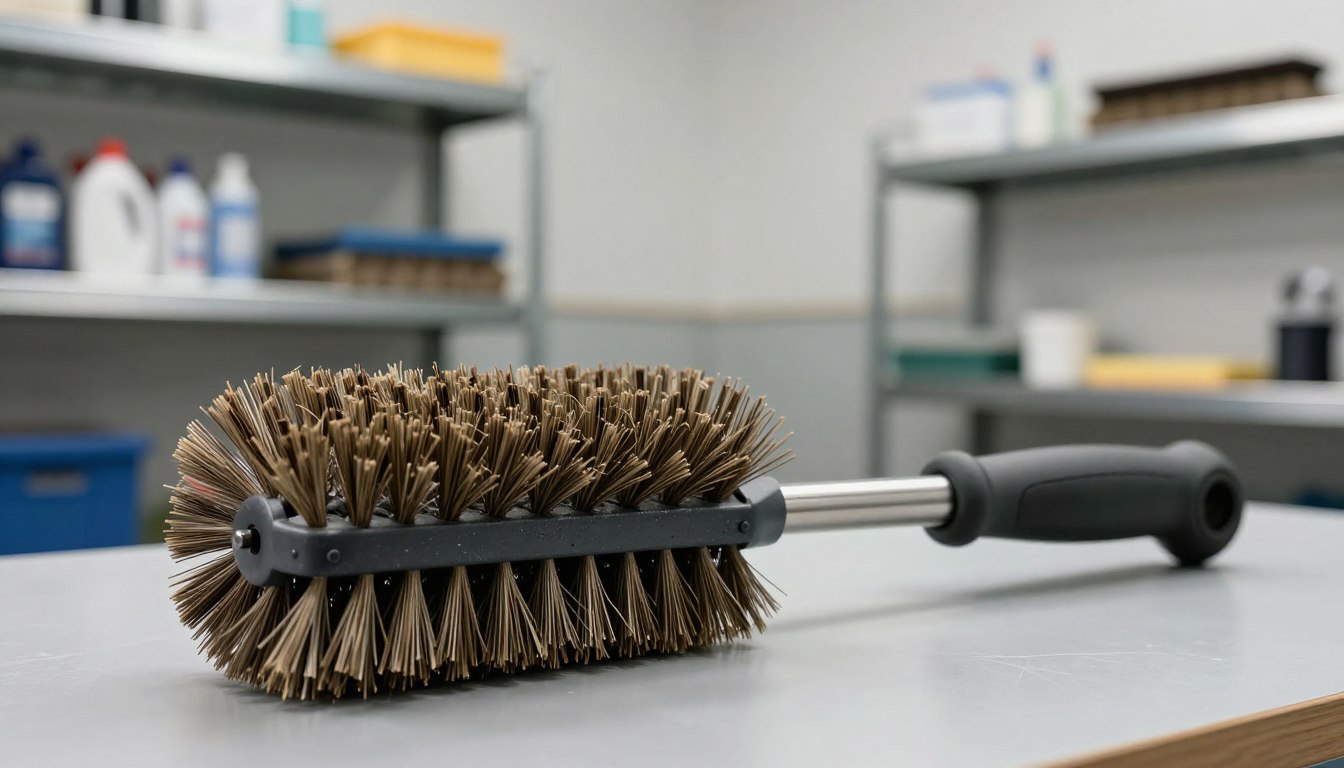
A high-quality rotary cleaning brush designed for deep cleaning, prominently displayed in a professional workshop setting. In the foreground, focus on the brush head, showing its bristles in varying lengths, demonstrating robust construction for durability. The middle ground features the brush attached to an ergonomic handle with a reinforced connection, emphasizing its build quality. The background displays a clean, well-lit workspace with metal shelves and cleaning supplies, evoking a sense of professionalism and efficiency. Use soft, even lighting to avoid harsh shadows, highlighting the details of the brush. The atmosphere is industrious yet organized, emphasizing reliability and maintenance-friendly design characteristics in a modern cleaning environment.
Industrial-Grade Housing and Frame Materials
The housing and frame of a rotary brush are key to its durability. Industrial-grade materials like stainless steel or heavy-duty plastics are best. They are strong and don't rust easily.
Using top-notch materials for the housing and frame helps avoid damage. This keeps the brush working longer.
Bearing and Seal Specifications for Extended Runtime
The bearings and seals in a rotary brush are vital for its performance and life. High-quality bearings and seals stop dirt and reduce friction. This makes the brush last longer.
Choosing the right bearings and seals is important. They must handle the brush's demands and the environment it's used in.
Quick-Release Brush Systems That Cut Changeover Time
Quick-release mechanisms in rotary brushes are great for fast changes. This is helpful when different cleaning tasks need different brushes.
Tool-Free Replacement Mechanisms
Tool-free replacement mechanisms make quick-release systems even better. They let operators change brushes without tools. This saves time and prevents tool loss.
Universal Mounting Standards
Universal mounting standards for rotary brushes make them work with many machines. This makes setup easier and changeovers smoother. It helps avoid delays.
By focusing on these build quality features, you can lower maintenance needs. This boosts productivity and saves money.
Power Supply and Electrical Requirements for Reliable Performance
It's key to match your rotary cleaning brush's power needs with your facility's setup. You must know the brush's voltage and amperage needs. Then, make sure these match your electrical system.
Voltage and Amperage Specifications to Match Your Infrastructure
The voltage and amperage of a rotary cleaning brush are crucial for its work. If the brush's specs don't match your setup, it might not work well or could get damaged.
For example, a brush made for a higher voltage than your facility might not work right. Or, using a higher voltage than the brush is rated for can harm it.
Voltage Rating | Amperage Rating | Typical Application |
120V | 5A | Light-duty cleaning tasks |
240V | 10A | Heavy-duty industrial cleaning |
480V | 20A | High-demand manufacturing environments |
Corded vs. Battery-Powered Rotary Brush Systems
Choosing between corded and battery-powered brushes depends on several things. These include how mobile you need the brush, where power outlets are, and the cleaning tasks.
Corded brushes give steady power and are best for stationary or fixed-path cleaning. Battery-powered brushes offer more freedom. They're great for moving around or where power outlets are hard to find.
Power Consumption Efficiency Ratings
Knowing how much power your brush uses is important. It helps cut costs and is better for the environment. Brushes that use less power save you money and help reduce carbon emissions.
When picking a brush, look for ones with high efficiency ratings. These not only lower your energy bills but also help make your operation greener.
Implementing a Spec-Based Maintenance Schedule
A well-planned maintenance schedule is key for your rotary cleaning brush. It boosts the efficiency of your cleaning equipment. By following the manufacturer's specs, your cleaning operations will run smoothly and effectively.
We focus on three main areas: daily checks, regular maintenance, and tracking performance. These steps help keep your equipment in top shape.
Daily Pre-Operation Inspection Checklist
Before each use, inspect your rotary cleaning brush carefully. Look for wear on the bristles, check if it's attached right, and make sure all electrical parts are good.
- Inspect brush bristles for wear and damage
- Check the attachment and mounting of the brush
- Verify the condition of electrical cords and connections
Hour-Based Preventive Maintenance Intervals
Regular maintenance is key to keeping your brush working well. It involves tasks done at set intervals, based on how many hours it's used.
Maintenance Task | Interval (Hours) |
Brush Inspection | 50 |
Bearing Lubrication | 100 |
Electrical Component Check | 200 |
Tracking Performance Metrics to Predict Component Failure
It's important to watch how your brush performs. Look at its cleaning power, how much energy it uses, and any changes in sound or vibration.
By following these steps, you can cut down on downtime and boost your cleaning efficiency. Regular upkeep not only makes your equipment last longer but also keeps your cleaning effective and reliable.
Conclusion
Choosing the right rotary cleaning brush is key to less downtime in your cleaning lines. Look at motor power, brush material, RPM, size, build quality, and power supply. These factors can greatly boost your cleaning efficiency.
A heavy duty scrubbing brush that fits your needs can make cleaning better, cut down on maintenance, and boost productivity. We've covered the main things to think about when picking a rotary cleaning brush.
Following these tips can help you clean more efficiently. The right heavy duty scrubbing brush can really change your cleaning lines for the better. With the right specs, you can reach your cleaning goals.
FAQ
Why is motor torque more important than RPM for an industrial floor cleaning brush?
RPM shows how fast something spins. But torque is what gives the power to keep the brush moving under heavy pressure. Brands like Tennant use high torque to stop the motor from stalling when we press down hard.
How do we determine the best bristle material for our commercial cleaning equipment?
It depends on the floor type and dirt. For tough cleaning, Malish grit-impregnated bristles are great. For sensitive floors, softer nylon or polypropylene works well to avoid scratches.
Can a rotary brush attachment improve our cleaning cycle times?
Yes, it can. A wider path and adjustable speed help cover more area faster. Systems like Kärcher let us adjust speed for the best results, saving time and energy.
What are the advantages of a quick-release rotary brush system?
Quick-release systems save time. Tools like Advance scrubbers make it easy to change brushes or types quickly. This keeps our equipment running without downtime.
Should we invest in a corded or battery-powered rotary brush for cleaning large facilities?
For large areas, a battery-powered brush is best. Brands like Milwaukee or Makita offer freedom of movement. However, for continuous use, a corded brush never runs out of power.
How often should we perform maintenance on our professional cleaning brush?
Check it daily for debris and wear. Follow a schedule to keep it running smoothly. A well-maintained brush lasts longer, reducing the frequency of repairs.
Contact
Leave your information and we will contact you.


