English
Cylinder Brush Manufacturer Checklist: Core, Diameter and Balance
Created on 03.16
Finding the right partner for your machinery needs is crucial for quality results. We understand that choosing the correctcustom equipmentmeans checking several important specs. Our team aims to make this process easier for you.
cylinder brush
The journey begins with a strong core and precise measurements. We provide materials like aluminum or poly to ensure your industrial brush works well. It's important to check the diameter and length to fit your machinery perfectly.
Balance is key for smooth operation. Excellent geometry helps these tools run smoothly at high speeds without shaking. We pay close attention to these details to keep your production lines running smoothly.
Key Takeaways
- Choose core materials like aluminum or stainless steel for durability.
- Verify exact diameter and length to match your specific machinery.
- Prioritize balance to prevent vibration during high-speed operations.
- Customization options ensure the filament density meets your needs.
- Select a reliable manufacturer with a comprehensive checklist for every cylinder.
Understanding Your Cylinder Brush Requirements
Before picking a rotary brush, it's key to know what you need. We look at use, conditions, and goals to find the best brush for you.
First, think about why you need a cylinder brush. Is it for cleaning, getting surfaces ready, or something else? Each job needs a brush with the right grit or material.
Also, think about where and how you'll use the brush. Things like temperature, chemicals, and dirt matter. They can change how well the brush lasts and works.
Key Factors to Consider:
- Intended application
- Operating environment
- Desired outcomes
- Brush material and construction
To show why knowing your needs is important, let's look at different brushes and what they're good for.
Application | Brush Material | Diameter Range | Filament Type |
Cleaning | Stainless Steel | 4-8 inches | Abrasive Nylon |
Surface Preparation | Carbon Steel | 6-12 inches | Polypropylene |
Deburring | Aluminum | 2-6 inches | Brass |
By understanding your needs and considering these factors, we can identify the ideal rotary brush for you, enhancing your work efficiency.
Core Material and Construction Specifications
The core material and construction are key to a cylinder brush's success. The core is the heart of the brush, affecting its performance and life span. We'll look at core materials, their uses, and why core diameter and shaft fit matter.
Steel Core Options for Industrial Applications
Steel cores are strong and durable, making them perfect for industrial use. They come in different types based on their material and treatment.
Galvanized Steel Cores
Galvanized steel cores have a zinc coating to fight corrosion. This is great for places where moisture is a problem. Galvanization helps the core resist rust, making the brush last longer.
Stainless Steel for Corrosive Environments
In very corrosive places, stainless steel cores are best. They can handle tough chemicals and harsh conditions. Stainless steel is perfect for the food and chemical industries.
Plastic and Composite Core Alternatives
Not every job needs a steel core. Plastic and composite cores are good for other situations.
When to Choose Non-Metal Cores
Non-metal cores are light and resist some chemicals. They're great when you need to save weight or avoid metal contamination.
Core Diameter and Shaft Compatibility
The core's size and fit with the shaft are crucial. They ensure the brush works right.
Standard Bore Sizes
Brushes come in standard sizes to fit common shafts. It's important the core fits the shaft well for a good connection.
Keyway and Mounting Requirements
The keyway and mounting needs are also important. The keyway keeps the brush aligned and secure on the shaft, preventing it from slipping.
Core Material | Application | Key Benefits |
Galvanized Steel | Industrial applications with moderate corrosion risk | Corrosion resistance, durability |
Stainless Steel | Highly corrosive environments, food processing, chemical industries | High corrosion resistance, hygienic |
Plastic/Composite | Applications requiring lightweight, chemical resistance | Lightweight, resistant to certain chemicals |
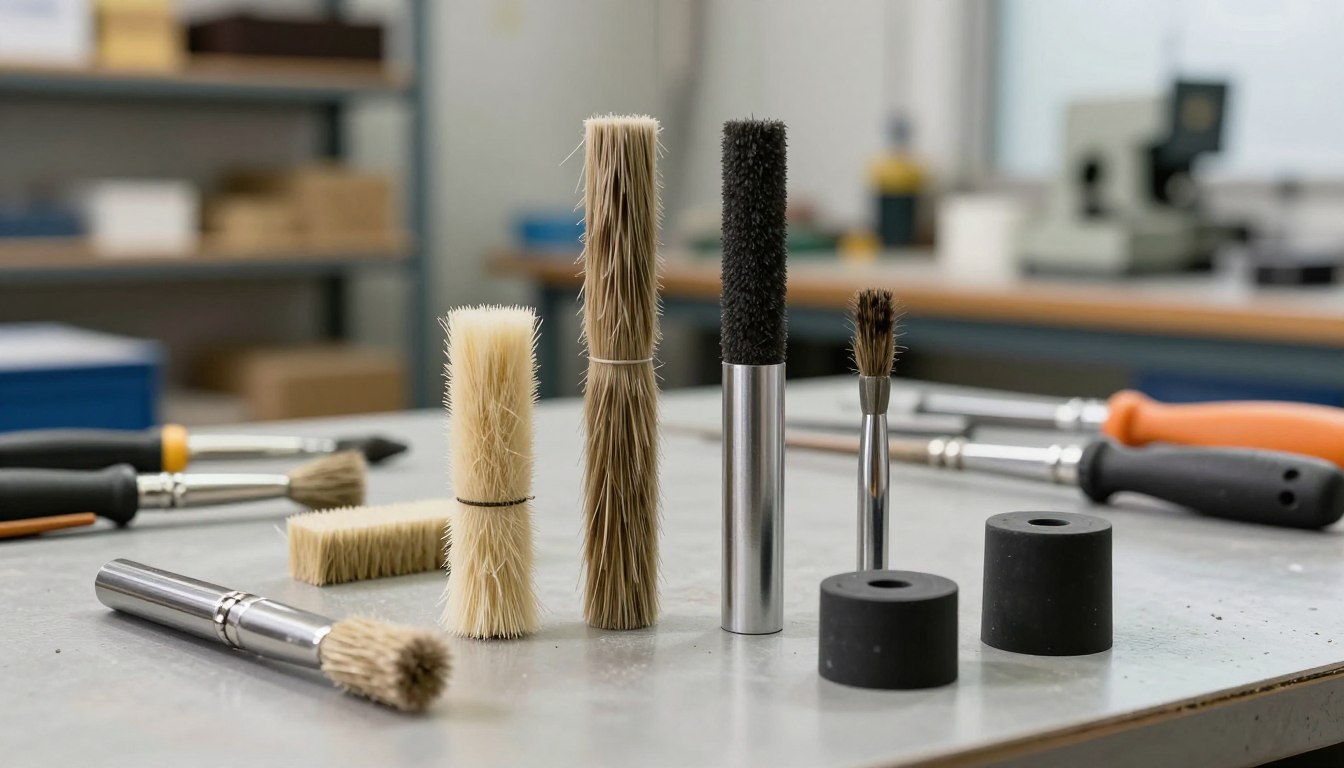
A detailed composition illustrating various core materials used in cylinder brushes, focusing on different textures and finishes. In the foreground, present several cylinder brush cores made from materials such as nylon, metal, and rubber, showcasing their unique characteristics and construction. The middle ground should feature a workbench with tools and equipment for brush manufacturing, adding context. In the background, softly blurred workshop elements like shelves filled with raw materials and machinery to create an industrial atmosphere. Use bright, natural lighting to emphasize the details of the materials, while a shallow depth of field keeps the focus sharp on the brush cores. Aim for a clean, professional aesthetic that conveys craftsmanship and precision in brush manufacturing.
Determining the Right Cylinder Brush Diameter
The size of a cylinder brush is key to its performance. It must fit well with the surface it works on. We'll look at what affects the brush's size, like its outer diameter, trim length, and what it's used for.
Outer Diameter Measurements and Tolerances
Getting the outer diameter right is crucial. Outer diameter measurements must be exact. This ensures the brush fits and works as it should.
How We Measure Brush Diameter
We measure the brush diameter by looking at the fully extended length of the filaments. This is important because it changes how the brush interacts with surfaces. The tolerance for these measurements can change based on the application and the manufacturer's specs.
Here's a table showing standard diameter measurements and their tolerances:
Diameter Range (inches) | Tolerance (± inches) |
0-6 | 0.1 |
6-12 | 0.15 |
12+ | 0.2 |
Trim Length Considerations
The trim length of a cylinder brush impacts its size and how well it works. Trim length is the length of the filaments after they're trimmed.
Calculating Effective Brush Diameter
To find the effective brush diameter, we need to know the core diameter and trim length. The formula is simple: Effective Diameter = Core Diameter + (2 * Trim Length).
Material Compression Factors
Material compression can change the brush's effective diameter. When in use, the filaments can compress, making the diameter smaller. Knowing these compression factors helps pick the right brush for your job.
"The key to optimal brush performance lies in understanding the intricacies of its diameter and how it interacts with the surface it's meant to work on."
A leading industry expert
Application-Specific Diameter Requirements
Different jobs need different brush diameters. We'll look at two cases: conveyor cleaning and surface finishing and deburring.
Conveyor Cleaning Applications
In conveyor cleaning, the brush diameter must be big enough to cover the belt and remove debris. Conveyor width and belt thickness are key in picking the right diameter.
For surface finishing and deburring, the brush diameter is important for quality. It needs to be big enough to cover the area but not too big to handle.
By knowing your application's needs and considering outer diameter, trim length, and material compression, we can find the perfect cylinder brush for you.
Balance and Rotational Performance
Getting the balance right is key for rotary brushes to work well. If not balanced, they can vibrate a lot, wear out faster, and even be dangerous. We'll look at why balance is so important and how to achieve it.
Why Balance Matters in Rotary Brush Applications
An unbalanced rotary brush can cause big problems. It can vibrate a lot, wear out equipment, and even be unsafe. It's crucial to balance a rotary brush to keep equipment in good shape.
Vibration and Equipment Wear
Vibration from an unbalanced brush can wear down the brush and the equipment it's on. This means more maintenance and less work time. By balancing the brush, we can reduce vibration and make equipment last longer.
Safety Considerations at High Speeds
At high speeds, an unbalanced brush can be very dangerous. It might break apart or fail, putting people at risk. It's vital to balance brushes to keep everyone safe.
Static vs. Dynamic Balancing Methods
There are two main ways to balance rotary brushes: static and dynamic. The right method depends on how the brush will be used.
Understanding Static Balance
Static balance means a brush won't move on its own when still. This balance is good for many uses, mainly at slower speeds.
Dynamic Balancing for High-Speed Operations
Dynamic balance considers the brush's balance while it's moving. It's essential for fast operations where small imbalances can cause big problems. This method helps the brush run smoothly and safely at high speeds.
RPM Considerations and Balance Tolerances
The speed of a rotary brush, in RPM, affects how balanced it needs to be. Faster speeds need tighter balance to avoid vibration and ensure safety.
Maximum Operating Speed Ratings
Every rotary brush has a top speed it can handle safely. Knowing and sticking to these limits is key for the brush's balance and performance.
A detailed and professional illustration focusing on a rotary brush balance setup. Foreground features a sleek, modern rotary brush with visible bristles, positioned on a precision balance scale, showcasing its cylindrical core and diameter. The middle section captures a technician, dressed in a white lab coat and safety goggles, carefully adjusting the brush while looking through a digital measuring device, ensuring precision. The background displays a clean, well-lit industrial workshop, with tools and equipment organized neatly on shelves. Soft, diffused overhead lighting illuminates the scene, creating a focused and technical atmosphere. The angle is slightly elevated to emphasize the balance, conveying a sense of accuracy and professionalism in manufacturing practices.
Understanding balance and choosing the right method helps us create a custom brush. This brush will meet our needs and work well for a long time.
Working With Your Brush Manufacturer
Starting a custom brush project means building a strong partnership with your manufacturer. Clear communication is key. We know every project is different. We're here to help bring your ideas to life.
Communicating Your Specifications Clearly
Good communication is the base of a successful custom brush project. To make sure your manufacturer gets it, share all the details. Talk about the application, materials, and what you need the brush to do.
Key specs to share include:
- The type of material being brushed
- Desired brush diameter and trim length
- Core material and construction
- Required balance and rotational performance
Custom Brush Development Process
We're all about teamwork in custom brush development. Our team works with you to create a brush that fits your needs. This journey has many steps, from the first chat to when you get your brush.
Our process includes:
- Initial consultation to discuss your needs
- Design and prototyping
- Testing and refinement
- Production and Quality Control
Prototyping and Testing
Prototyping is a key part of making a custom brush. It allows us to test the brush in real-world situations and refine it before mass production. We collaborate with you to ensure the prototype meets your exact specifications.
Quality Standards and Testing Procedures
We adhere to stringent quality standards at our factory, ensuring every brush is of the highest caliber. Our quality checks involve comprehensive tests to confirm each brush meets your requirements and performs as expected.
Our quality control steps include:
Test | Description | Frequency |
Visual Inspection | Checking for defects in materials and construction | 100% |
Performance Testing | Evaluating brush performance under simulated conditions | Sample basis |
Balance Testing | Verifying that the brush meets balance specifications | Sample basis |
Conclusion
Choosing the right cylinder brush can seem hard, but it's doable. Look at the core material, diameter, and balance. These factors are key to its performance.
Working with a trusted maker lets you tailor a brush to fit your needs. Knowing the difference between disc and cylindrical brushes is crucial. This is shown in our look at disc brush vs cylinder brush.
Our team is here to help you pick the best cylinder brush. We make sure it meets your quality expectations. With the right brush, you'll get top-notch cleaning or sweeping results.
FAQ
Why is the selection of core material so critical when designing a cylinder brush?
The core is the heart of every industrial brush we make. It gives the brush the strength and stability needed for rotation. The right material, like stainless steel for harsh environments or light composites, ensures the brush can handle its job without breaking or bending.
How does a brush manufacturer ensure a rotary brush operates smoothly at high speeds?
We focus on balance and rotational performance to avoid vibrations and wear. For fast speeds, we use dynamic balancing to fix weight issues while the brush spins. This keeps your equipment safe and running longer.
What is the difference between static and dynamic balancing for an industrial brush?
A: Static balance is for brushes that don't move much. But for rotary brush tasks at high RPM, we use dynamic balancing. This method fixes issues that show up when the brush is spinning, making it safer and smoother.
How do we accurately determine the diameter needed for our specific application?
We look at more than just the diameter. We consider trim length, material compression, and the task at hand. By figuring out the effective diameter, we make sure the bristles work right for your needs.
Can we customize the mounting options for a cylinder brush to fit our existing machinery?
Yes, we can make custom brush development fit your setup perfectly. We measure your standard bore sizes and mounting needs carefully. This ensures the cylinder brush fits your shaft well, preventing slippage and ensuring efficient power transfer.
What does the custom brush development process look like for a new client?
We start by understanding your unique needs and environment. Then, we create prototypes and test them. This step confirms the industrial brush works as expected before we start making it in bulk.
When should we opt for galvanized steel cores over other materials?
Choose galvanized steel cores for tasks needing strength and durability but not extreme chemical resistance. It's a strong, cost-effective option for many rotary brush jobs where moisture isn't a big concern.
Why is it important to consider RPM ratings when ordering a cylinder brush?
Every cylinder brush has a maximum operating speed rating. Going over this can damage the brush or your equipment. We work with you to match the brush's speed to your equipment's, ensuring reliable performance.
Contact
Leave your information and we will contact you.


