English
Radiator Brush: Fin-Safe Cleaning Specs for Procurement
Created on 03.16
Keeping a vehicle cool is key to avoiding expensive repairs. Dust and road grime can block airflow in the cooling system. A radiator brush is a safe way to clear these blockages.
radiator brush
When looking for a radiator cleaning tool, don't just look at the price. It's about saving your fleet money and making engines last longer. Choose materials that won't scratch or bend soft metal parts.
We aim to find specs that make your crew's work easier. The right length and grip lead to better results. Let us help you find the best tools for your shop, ensuring safety and efficiency.
Good tools mean your team can work faster and safer. The right gear makes a big difference in daily maintenance. These specs ensure you get the most value for your money and keep systems clean.
Key Takeaways
- Safe cleaning prevents expensive damage to delicate aluminum fins.
- Durable material choices extend the life of your maintenance tools.
- Proper handle length improves reach in very tight engine spaces.
- Bristle density determines how well the tool removes stubborn debris.
- Quality procurement helps reduce long-term maintenance costs for fleets.
- Ergonomic designs protect your technicians from repetitive strain.
1. Understanding Fin-Safe Design in Radiator Cleaning Tools
The cooling system of a vehicle depends a lot on its radiator fins. These fins help spread heat from the coolant to the air. If they get damaged or blocked, the cooling system doesn't work as well.
1.1 The Critical Role of Radiator Fins in Cooling Efficiency
Radiator fins are very important for cooling. They are thin, metal parts that make the radiator bigger. This lets it transfer heat better. But, if these fins get dirty or damaged, the radiator can't cool the engine right.
Here's a table showing how fin damage affects cooling:
Fin Condition | Cooling Efficiency | Potential Engine Impact |
Clean and Undamaged | Optimal | None |
Partially Clogged | Reduced | Overheating |
Damaged or Bent | Significantly Reduced | Engine Damage |
1.2 How Traditional Cleaning Methods Damage Delicate Fins
Old cleaning methods can hurt the radiator fins. Abrasive cleaners can scratch or bend them. High-pressure washes can knock them off or break them. This not only makes the cooling system less effective but can also cost a lot to fix.
A pristine radiator maintenance brush designed for effective fin-safe cleaning, depicted in the foreground. The brush should feature fine bristles specifically shaped to reach deep into radiator fins without causing damage, showcasing its ergonomic handle for ease of use. In the middle ground, an opened radiator with visible fins illustrates the cleaning process, revealing a few dust particles to emphasize the pristine nature of the brush. The background should be a well-lit workshop environment, with tools neatly arranged on a workbench, enhancing the professional atmosphere. The lighting is bright and even, capturing the details of the brush and radiator clearly. The mood is focused and task-oriented, conveying the importance of proper maintenance in an industrial setting.
1.3 Defining Fin-Safe Technology in Modern Radiator Brushes
Modern radiator brushes with fin-safe technology clean fins without harming them. They have soft bristles or flexible wires that gently remove dirt. A fin comb brush or a car radiator cleaner with this technology keeps the fins safe.
When picking a radiator maintenance brush, look for fin-safe design. This makes sure the cleaning doesn't hurt the radiator's performance or life.
2. Core Radiator Brush Specifications for Procurement Teams
Buying radiator brushes requires a deep look at key specs for good cooling system care. Important factors ensure the brush works well and is safe to use.
2.1 Bristle Material Composition and Safety Standards
The bristles' material is key for the brush's performance and lasting use. Various materials have different stiffness, durability, and safety levels.
2.1.1 Nylon vs. Boar Hair vs. Synthetic Polymer Bristles
Nylon bristles are tough and last long. They're good for tasks needing some stiffness. Boar hair bristles are softer and safer for delicate fins. Synthetic polymer bristles are durable yet gentle.
2.1.2 Bristle Stiffness Ratings for Different Applications
Bristle stiffness is vital for effective cleaning without harming fins. Stiffness varies by application, from soft for delicate fins to stiff for tough cleaning.
2.2 Handle Construction and Ergonomic Requirements
The handle's design is crucial for comfort and control. Ergonomic handles help avoid fatigue and improve handling.
A good handle should fit well and be made to last. It should be durable and not wear out easily.
2.3 Brush Head Geometry and Access Capabilities
The brush head's shape affects its ability to clean hard-to-reach radiator areas. A versatile head design is best for tight spaces and effective cleaning.
2.4 Overall Dimensions and Reach Specifications
The brush's size and head dimensions are key for effective use in various settings. Its reach is also important, mainly for radiators in hard spots.
Procurement teams must think about their specific needs when looking at a brush's size and reach.
3. Vehicle Radiator Cleaning Brush Categories and Selection
Keeping your radiator in top shape needs the right tools. Knowing the different types of radiator cleaning brushes is key. With so many options, it's helpful to sort them out.
3.1 Long-Handle Radiator Maintenance Brushes
Long-handle brushes are made for getting into tight spots in radiators. They're great for cars with tricky radiator setups or hard-to-reach spots.
Key Features: Long handles for deep cleaning, tough bristles for a thorough job.
3.2 Dual-Function Fin Comb and Brush Tools
Dual-function tools do it all. They clean and straighten radiator fins, boosting cooling efficiency. It's a one-stop solution for your radiator needs.
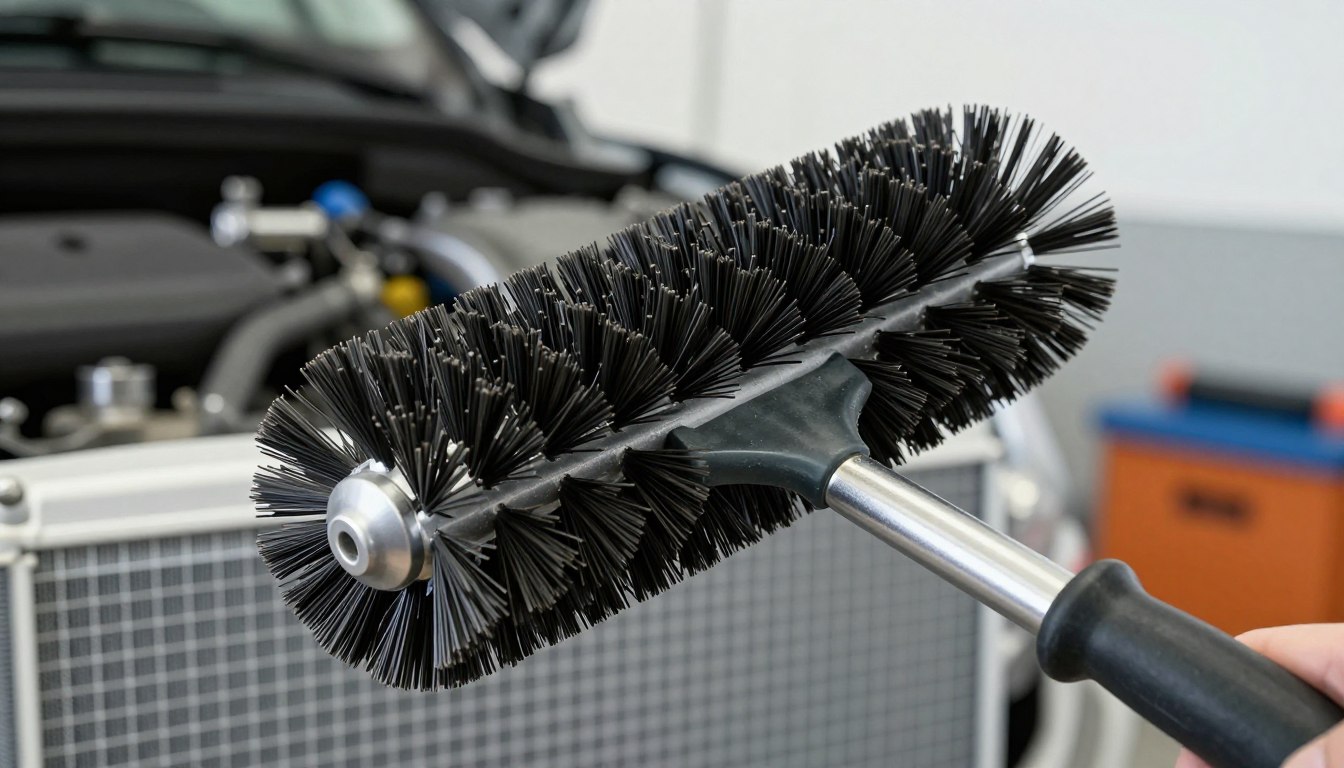
A close-up view of a vehicle radiator cleaning brush, showcasing its unique brush design with durable bristles and a sturdy handle. The foreground features the brush prominently, displaying its bristles in detail to emphasize texture and functionality. The middle ground includes a slightly blurred background of a workshop environment, with tools and radiator components subtly hinting at automotive maintenance. Soft, natural lighting illuminates the scene, creating a clean and professional atmosphere. The angle should be slightly tilted to capture the brush from a dynamic perspective, highlighting its utility for effective cleaning. The overall mood is focused and industrious, conveying a sense of reliability and performance in automotive care.
3.3 Flexible Wire Car Radiator Cleaners
Flexible wire cleaners are perfect for odd-shaped radiators. Their bendy design lets you clean hard-to-reach areas easily.
Advantages: Great for odd shapes, gets rid of dirt well.
3.4 Compressed Air Radiator Dust Removers with Brush Attachments
Compressed air cleaners with brushes are a strong choice. The air blasts away dirt, and the brush sweeps up the mess. It's a hands-off way to clean.
Key Benefits: Cleans well, saves effort.
4. Essential Procurement Criteria for Cooling System Brushes
The success of cooling system brushes depends on key criteria. Procurement experts must evaluate these factors carefully. This ensures the brushes meet standards and work well in their jobs.
4.1 Material Durability and Chemical Compatibility
The materials used in cooling system brushes are crucial. They must handle chemicals and temperature changes well. Material compatibility is key to avoid damage to the radiator fins. Look for high-quality, corrosion-resistant materials that last through cleaning.
4.2 Application-Specific Performance Requirements
Different jobs need cooling system brushes with unique features. Knowing these needs helps make better choices.
4.2.1 Automotive and Truck Radiator Applications
For cars and trucks, brushes must handle complex fin shapes without harm. A radiator fin straightening tool might be needed to fix bent fins. The brush should also clean between fins well.
4.2.2 HVAC and Industrial Heat Exchanger Cleaning
In HVAC and industrial settings, brushes clean heat exchangers with specific needs. These brushes must be strong and fit larger, more complex exchangers.
4.3 Maintenance and Replacement Lifecycle Considerations
Teams should think about the brushes' maintenance and replacement needs. Easy-to-clean brushes save money over time. Knowing how long they last and when parts are available is important for planning.
4.4 Compliance with Industry Safety Standards
It's vital that cooling system brushes meet safety standards. This includes safety in materials, design, and electrical safety. Following these standards keeps people safe and protects the company from legal issues.
4.5 Total Cost of Ownership Analysis
Doing a total cost of ownership (TCO) analysis is key. It looks at the upfront cost, ongoing maintenance, replacement, and downtime. This helps understand the full cost of getting cooling system brushes.
5. Conclusion
Choosing the right radiator brush is key for keeping a vehicle's cooling system in top shape. Knowing about fin-safe design and looking at important specs helps teams pick the right tool.
When looking at radiator brush choices, quality and performance should come first. Anza-brush category has many options for different needs, like oil paints and varnishes.
Good procurement choices mean looking at material durability, how well it works for specific tasks, and if it meets safety standards. This way, we make sure vehicles and equipment work well for a long time.
We should choose quality over cost and understand the value of what we're getting. This helps us pick the best paint brushes and radiator brushes for our needs.
FAQ
Why should we prioritize a specialized radiator brush over standard cleaning tools?
A radiator brush is better than regular brushes because they can damage the delicate fins. Standard brushes are too stiff or too soft. A professional-grade radiator maintenance brush is made to clean without harming the fins.
What is the primary difference between a car radiator cleaner and a radiator fin straightening tool?
A car radiator cleaner brush removes debris and dust. On the other hand, a radiator fin straightening tool (or fin comb brush) fixes bent fins. This ensures good airflow through the cooling system brush area.
How often should we use a radiator dust remover on our fleet vehicles?
Check your vehicles during every oil change. Use a radiator dust remover or vehicle radiator cleaning brush every 12,000 to 15,000 miles. In dusty areas, clean monthly to avoid overheating.
Which bristle material do we recommend for a professional radiator cleaning tool?
High-quality synthetic polymer or nylon bristles are best. Brands like Lisle and Titan Tools use these for their durability and safety. For heavy-duty needs, look for boar hair blends.
Can a vehicle radiator cleaning brush be used on other parts of the cooling system?
Yes! A cooling system brush works on A/C condensers, intercoolers, and transmission coolers. It's a handy tool for any maintenance shop or DIY enthusiast.
What should procurement teams look for regarding the reach of a radiator brush?
Look for a "long-reach" brush, 18 to 24 inches. Modern engine bays are tight. A flexible or extended handle makes reaching easier without disassembling the vehicle.
Are compressed air attachments better than a manual radiator maintenance brush?
They work best together. Compressed air removes loose particles, but a manual radiator maintenance brush is needed for tough grime. A radiator cleaning tool followed by air ensures a deep clean.
Contact
Leave your information and we will contact you.


