English
Fin Radiator Brush: Bristle Stiffness and Fin-Spacing Checks
Created on 03.16
We all want our cooling systems to work well when it's hot outside. Keeping your HVAC unit in good shape saves money and prevents big repair costs. It's important to make sure air can move freely through the metal plates.
Regular upkeep keeps the cooling vanes straight and clean. We use special tools to check if the bristles are stiff enough. This ensures they can remove dirt without harming the system. It also helps us make sure the gaps between parts are just right.
fin radiator brush
In this guide, we'll talk about why these details matter for your home's comfort. We aim to help you get the best performance from your heating and cooling. The right tools are key to better air quality.
Key Takeaways
- Regular maintenance improves HVAC system airflow and efficiency.
- Proper bristle stiffness prevents damage to delicate metal plates.
- Correct spacing between cooling vanes is vital for heat exchange.
- Using the right cleaning tool extends the life of your equipment.
- Routine checks help homeowners avoid costly emergency repairs.
- Straightening bent parts restores optimal system performance.
Understanding the Fin Radiator Brush and Its Importance
The fin radiator brush is a simple yet vital tool for maintaining your radiator's health and efficiency. It cleans between the fins, removing dust and debris. This helps improve airflow and heat dissipation.
What Is a Fin Radiator Brush
A fin radiator brush, also known as a radiator cleaning brush or fin brush for radiators, is a specialized tool. It has soft to stiff bristles for gentle cleaning between radiator fins. It's used to keep radiators clean and efficient in HVAC systems.
These brushes come in various sizes and bristle stiffness levels. The right fin radiator brush is key for effective cleaning and to prevent damage to the radiator fins.
Why Regular Radiator Fin Maintenance Matters
Regular maintenance of radiator fins is crucial for HVAC system performance. Clogged fins reduce efficiency, leading to higher energy consumption. This makes the system work harder and can shorten its lifespan.
- Improves airflow and heat dissipation
- Reduces energy consumption
- Extends the lifespan of the HVAC system
- Prevents costly repairs due to overheating or system failure
Regular radiator fin maintenance ensures your HVAC system operates smoothly and efficiently.
Common Radiator Fin Problems We Encounter
Radiator fins can face several issues, including:
- Dust and debris accumulation, which reduces airflow and heat transfer efficiency.
- Bent or damaged fins, which can significantly impede airflow and system performance.
- Corrosion, which can weaken the radiator structure and lead to leaks or other serious issues.
Addressing these issues promptly with the right tools, such as a fin radiator brush, is crucial for maintaining the health and efficiency of your radiator.
Bristle Stiffness: The Key to Effective Radiator Cleaning
Bristle stiffness is key for good radiator cleaning. The right stiffness cleans fins well without damage.
Soft vs. Medium vs. Stiff Bristles
The bristle stiffness you choose depends on your radiator's type and condition. Let's look at the options:
Soft Bristles for Delicate Aluminum Fins
Soft bristles are best for radiators with delicate aluminum fins. They clean gently without harming the fins. Using a metal fin brush with soft bristles is wise for keeping aluminum radiators in good shape.
Medium Bristles for Standard HVAC Applications
Medium bristles are a good middle ground. They work well for most HVAC applications where fins are not too fragile.
Stiff Bristles for Heavy-Duty Industrial Radiators
Stiff bristles are for tough industrial radiators needing strong cleaning. They effectively remove tough dirt and grime.
Matching Bristle Stiffness to Your Radiator Type
Choosing the right bristle stiffness for your radiator is important. The wrong choice can damage or not clean well. For example, stiff bristles on a delicate aluminum radiator can bend or break it.
Before picking a brush, check your radiator's condition and type. If unsure, start with a softer brush to be safe.
How Bristle Material Affects Cleaning Performance
The bristle material also affects cleaning. Different materials have different durability and flexibility. For instance, nylon bristles are tough and last long, while stainless steel bristles are strong for heavy use.
When picking a metal fin brush, think about the bristle material and stiffness. The right mix ensures your radiators are cleaned well and safely.
Fin Spacing Checks: Measuring for the Perfect Fit
To make sure your radiator works well, you need to measure fin spacing right. Fin spacing is how far apart the fins are. It's key for good airflow and heat transfer.
How to Measure Fin Spacing on Your Radiator
Measuring fin spacing is easy with a ruler or caliper. Just count the fins in one inch to find the spacing.
To measure fin spacing: Put the ruler or caliper on the fins. Count the fins in one inch. This tells you the fin spacing in fins per inch (FPI).
Standard Fin Spacing Sizes in HVAC Systems
HVAC systems have different fin spacing sizes. Each size is for specific uses and places.
8 to 10 Fins Per Inch Systems
Systems with 8 to 10 FPI are for places where fins won't get damaged easily.
12 to 14 Fins Per Inch Systems
12 to 14 FPI systems have more fins. They're for places needing better heat transfer.
15+ Fins Per Inch High-Density Units
High-density units with 15+ FPI are for tight spaces. They need to work very efficiently.
Fins Per Inch (FPI) | Application | Efficiency Level |
8-10 FPI | Less demanding environments | Standard |
12-14 FPI | Standard HVAC applications | High |
15+ FPI | High-density, space-limited applications | Very High |
Why Proper Spacing Match Prevents Damage
Using the right fin brush or comb is key. It keeps your radiator's fins from getting damaged. The wrong one can bend or break fins, hurting efficiency and possibly causing system problems.
By matching fin spacing and using the right cleaning tools, you keep your radiator working well. This also makes it last longer.
Choosing the Right Fin Brush for Radiators
Choosing the best radiator brush means looking at a few important factors. These factors affect how well the brush works and how long it lasts. The right fin brush for radiators can make cleaning better and extend your radiator's life.
When picking a fin brush, think about the bristles, handle design, and what your radiator needs. Let's explore these details to help you choose wisely.
Metal Fin Brush vs. Synthetic Bristle Options
The choice between metal and synthetic bristles is a common debate. Metal fin brushes are tough and good at getting rid of tough dirt. They're great for deep cleaning.
Synthetic bristle brushes, on the other hand, are flexible and gentle. They're perfect for regular upkeep and for radiators with sensitive fins.
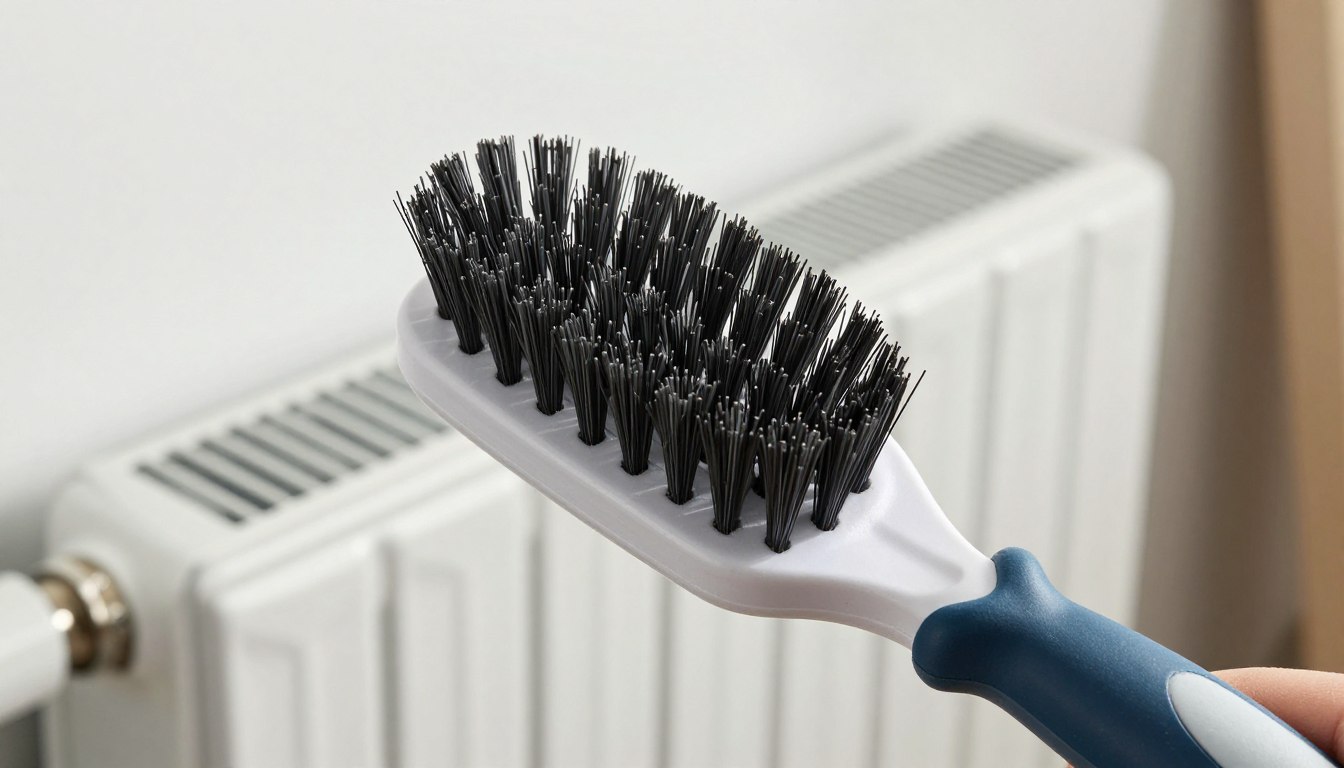
A detailed fin brush for radiators, showcasing several stiff bristles designed for cleaning between the fins. The brush should be the central focus, positioned prominently in the foreground with light reflections highlighting the bristles’ texture. In the middle ground, a slightly blurred radiator with spaced fins provides context, emphasizing the brush's purpose. The background features a well-lit, tidy workshop environment with soft shadows, creating a professional atmosphere. The lighting should be bright but diffuse, mimicking natural daylight to accentuate the colors and materials. Capture the brush at a slight angle to showcase its ergonomic handle and design, inviting viewers to appreciate its functionality.
Radiator Fin Comb vs. Brush: When to Use Each Tool
Knowing when to use a radiator fin comb versus a brush is key. A fin comb is made to fix bent fins, improving airflow and efficiency. It's essential for fixing damaged or bent fins.
A brush is better for general cleaning, like dusting and removing debris from between fins. For full maintenance, having both tools is best. For more tips, check our HVAC Brush Selection Guide.
Handle Design and Reach Considerations
The handle's design and reach are often missed but are crucial. A handle that's comfortable and ergonomic helps avoid fatigue. This makes cleaning easier and more efficient.
Think about your radiator's size and how easy it is to reach the fins when picking a brush. An extendable handle is handy for big radiators or those in hard spots.
How to Clean Radiator Fins Properly
To keep your radiator working well, it's key to know how to clean its fins right. Cleaning radiator fins needs the right tools and method to avoid damage. This ensures your HVAC system lasts longer.
Preparing Your Radiator for Cleaning
First, turn off your HVAC system's power. This is a must to avoid accidents or electrical shocks. Always make sure the system is fully turned off before you start cleaning.
Then, check the radiator fins for dirt or damage. Use your hands or a soft brush to remove big debris. This helps prevent pushing dirt deeper into the fins when you clean.
Step-by-Step Brushing Technique
Choosing the right brushing method is crucial for cleaning without harming the fins. Here's how to do it:
Starting Position and Brush Angle
Start by placing the fin brush at a 45-degree angle to the fins. This angle helps remove debris without bending the fins. Make sure the brush is in line with the fin direction to prevent damage.
Stroke Direction and Pressure Application
Stroke the brush through the fins in their direction. Use gentle to moderate pressure, based on how dirty they are. Don't press too hard, as it can bend or harm the fins.
Working Through Stubborn Debris
For tough debris, you might need to brush multiple times or use a fin comb. Be careful and patient to avoid damaging the fins.
Safety Precautions When Using a Radiator Fin Tool
When cleaning radiator fins, safety is a must to avoid injury. Wear gloves and safety glasses to protect yourself from sharp edges and debris.
"Safety is not just a precaution, it's a necessity when working with potentially hazardous materials and tools."
Also, watch the brush's bristle stiffness and the tool's condition to prevent accidents. Check your cleaning tools often for wear and tear. Replace them when needed.
Best Radiator Brush Features and Quality Indicators
A top-notch radiator fin tool is key for cleaning your radiator well and making it last longer. When picking a brush, look for certain features and quality signs. These ensure your radiator stays in good shape.
Durability and Build Quality Markers
The durability of a radiator brush is very important. It needs to handle regular use without breaking down. Choose brushes made from strong materials that can stand up to wear and tear.
The build quality also matters a lot. It affects how well the brush works and how long it lasts.
Key durability markers include:
- High-quality bristle material
- Robust handle construction
- Corrosion-resistant coatings
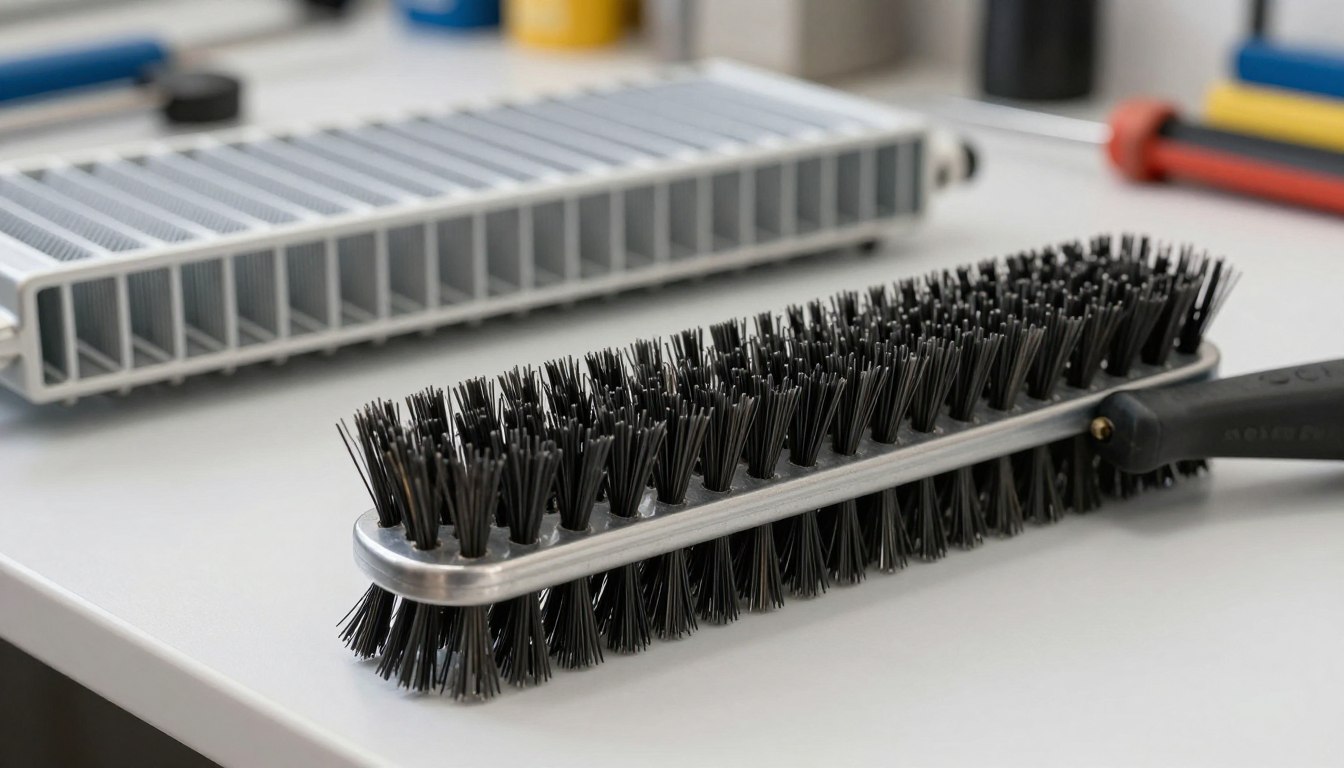
A high-quality image of a radiator fin tool prominently displayed on a clean, well-lit workbench. The foreground features the tool with its bristle head in sharp focus, showcasing robust, thick bristles designed for deep cleaning between tightly spaced radiator fins. In the middle ground, a radiating radiator is partially visible, its fins glistening under soft, natural light, emphasizing the spacing and cleanliness achieved with the brush. The background includes subtle hints of a garage or workshop setting, perhaps with tools and spare parts blurred to maintain focus on the tool. The atmosphere is professional and tidy, conveying a sense of precision and care in maintenance work. The angle is slightly above eye level to capture the tool's details clearly without any intrusive elements like text or logos.
Ergonomic Handle Design for Extended Use
An ergonomic handle is crucial for comfortable use over long times. A well-designed handle helps avoid fatigue and makes cleaning easier. Look for a handle that fits your hand well and is designed to reduce strain.
Multi-Purpose vs. Specialized Radiator Cleaning Brush Options
When picking a radiator brush, you might choose between a multi-purpose one or a specialized one. A fin comb for radiator fins is a specialized tool for specific tasks.
Feature | Multi-Purpose Brush | Specialized Brush |
Versatility | Can be used for various cleaning tasks | Designed for specific radiator fin types |
Effectiveness | May not be as effective for specific tasks | Highly effective for its intended use |
Cost | Generally more affordable | May be more expensive due to specialization |
Choosing between a multi-purpose and a specialized brush depends on your needs and the radiators you work with.
Conclusion
Keeping your radiator in good shape is key for the best airflow and system performance. The right fin radiator brush is a must for this.
We talked about how important it is to pick the right brush. Look at the bristle stiffness and fin spacing. This ensures your radiator stays clean and safe.
Regular cleaning with the right brush boosts airflow and keeps your radiator working well. This article has shown you how to do it. By following these tips, your radiator will stay in great condition, and your HVAC system will run smoothly.
FAQ
Why is it essential for us to use a dedicated fin radiator brush instead of a standard household brush?
A fin radiator brush is made for your HVAC system's coils and fins. Household brushes can be too thick or flimsy. This can harm airflow or even damage the fins. A specialized brush helps remove dust and debris, improving efficiency.
How do we determine if we need soft, medium, or stiff bristles for our radiator cleaning brush?
The right bristle stiffness is key for your equipment's safety. We use soft bristles for delicate aluminum fins in homes. Medium bristles work best for standard HVAC units. Stiff bristles are for heavy-duty industrial radiators. Choosing the right stiffness protects your radiator while cleaning effectively.
When should we choose a metal fin brush over a synthetic bristle option?
A metal fin brush is durable and works well in high-heat or heavily soiled radiators. But, it's not good for soft aluminum. For most homes, a high-quality synthetic fin brush for radiators is gentle yet effective.
How do we accurately measure the spacing for a fin comb for radiator fins?
Measure the fins per inch (FPI) of your radiator. Older units have 8 to 10 FPI, modern ones 12 to 14, and high-density ones 15+ FPI. This lets us pick the right fin comb for radiator fins for a perfect fit.
Is there a difference between a radiator fin comb and a radiator brush?
Yes, they serve different purposes. A radiator fin comb straightens bent fins. A radiator cleaning brush sweeps away dirt and debris. We use the brush for clean fins and the comb for bent ones.
What is the best technique for us to use when learning how to clean radiator fins?
Start with a vertical stroke following the fins' direction. Use gentle, consistent pressure and avoid horizontal strokes. Clean from top to bottom to let debris fall away.
What features should we look for in the best radiator brush for long-term use?
The best radiator brush has an ergonomic handle to prevent hand fatigue. Look for durability markers like reinforced bristle housing. A specialized brush for your FPI is more effective than a multi-purpose tool.
What safety precautions should we take before using any radiator fin tool?
Safety first. Turn off the HVAC system or radiator power before starting. Wear gloves to avoid cuts from sharp fins. Use eye protection with metal brushes or pressurized cleaners.
Contact
Leave your information and we will contact you.


