English
Stainless Steel Wire Brush: Corrosion Specs Buyers Should Ask
Created on 03.16
When we look for durable cleaning gear, performance is key. A good stainless steel wire brush supplier helps prevent rust and makes heavy labor easier. But, choosing the wrong grade can cause damage or metal decay over time.
We aim to guide you through the technical details that matter most for your projects. Knowing these metrics helps avoid early failure and keeps your tools working well. Our experience shows that quality matters in harsh conditions or when dealing with moisture.
stainless steel wire brush
Our team believes that knowledge is power when choosing the right equipment. We'll focus on the essential corrosion specs for your next big purchase. Our goal is to give you the facts you need to make a smart choice today.
Key Takeaways
- Identify metal grades like 304 or 316 to ensure high resistance.
- Evaluate oxidation levels to see how the tool handles wet areas.
- Verify quality certifications before you buy any new products.
- Consider the environment where you plan to use the gear most often.
- Ask about thermal treatments that improve the longevity of the metal.
- Compare alloy compositions to find the strongest options for your work.
Why Corrosion Resistance Defines Your Stainless Steel Wire Brush Investment
Corrosion resistance is key to your stainless steel wire brush's life and performance. Buying a wire brush is more than just a purchase. It's an investment in durability and quality for your work.
A durable stainless steel wire brush can handle many environments. But its ability to fight corrosion really matters. Corrosion can damage the brush, making it less effective and possibly harming the surfaces it touches.
Understanding Corrosion Resistance
Corrosion resistance in stainless steel wire brushes comes from the material and how it's made. Chromium, for example, creates a protective layer. This layer keeps the surface safe from corrosive elements.
Material | Corrosion Resistance | Typical Applications |
304 Stainless Steel | Good | General-purpose cleaning, food processing |
316 Stainless Steel | Excellent | Marine environments, chemical processing |
The table shows different stainless steel grades have different corrosion resistance levels. This makes some better for certain jobs than others.
Choosing a wire brush with the right corrosion resistance ensures your investment lasts. It also performs well in the conditions it faces.
Decoding Stainless Steel Grades for Maximum Corrosion Protection
To get the best corrosion protection, knowing the different stainless steel grades is key. The grade affects how durable and effective a wire brush is, even in tough environments.
Stainless steel grades vary in corrosion resistance, strength, and cost. Knowing these differences helps pick the right wire brush for your needs.
304 Stainless Steel: The Versatile Workhorse for General Use
304 stainless steel is a top pick for wire brushes because it's durable and versatile. It works well for many tasks, from cleaning at home to industrial jobs. The 304 grade has at least 18% chromium and 8% nickel, balancing cost and corrosion resistance well.
But, 304 might not be best for places with lots of chloride or extreme heat. Still, it's a solid choice for most general uses.
316 Stainless Steel: Superior Protection for Harsh Environments
For top-notch corrosion resistance, 316 stainless steel is the go-to. It has more molybdenum (at least 2%), boosting its fight against pitting and crevice corrosion, even in chloride-rich spots.
316 wire brushes are perfect for marine settings, chemical plants, and other tough spots where corrosion is a big worry. For more on 304 vs. 316, check out this comprehensive guide.
410 and 430 Series: Budget Options with Limitations
The 410 and 430 series are cheaper but have some downsides. 410 stainless steel is strong and somewhat resistant to corrosion, good for simpler tasks.
430 stainless steel also fights corrosion well in mild settings. But, both grades can't match the corrosion resistance of 304 and 316, making them less ideal for harsh environments.
In short, picking the right stainless steel grade for a wire brush depends on your needs and where it will be used. Here's what to remember:
- 304 Stainless Steel: Good for general use, corrosion resistant, and affordable.
- 316 Stainless Steel: Best for harsh spots, top corrosion resistance, but pricier.
- 410 and 430 Series: More affordable, some corrosion resistance, but for simpler tasks only.
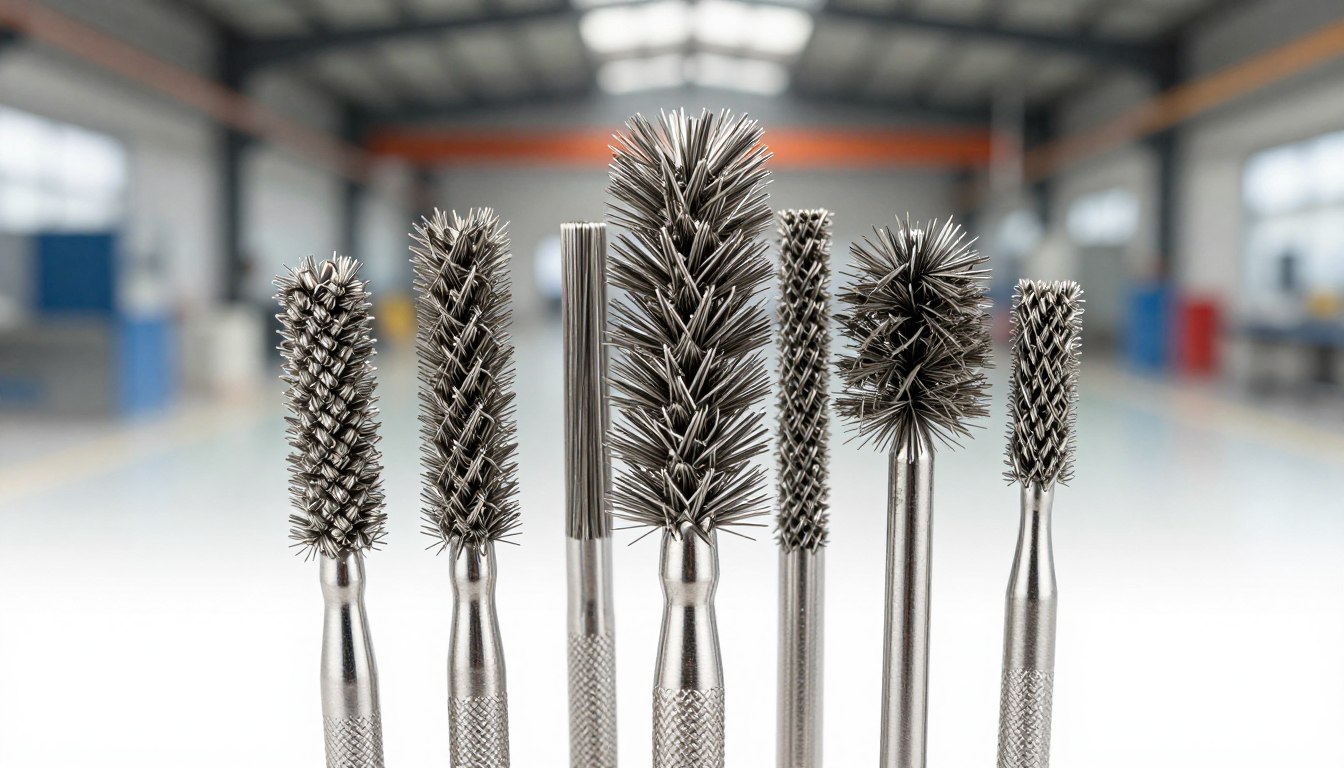
A detailed composition illustrating various grades of stainless steel wire brushes, prominently featured in the foreground. Each brush showcases unique characteristics like bristle density and thickness, reflecting different applications and corrosion resistance. The middle ground features a subtle gradient backdrop, enhancing the metallic sheen of the brushes. Soft, diffused lighting highlights the textures and materials, creating a clean, professional atmosphere. The background is a blurred industrial workshop setting, suggesting a practical context for use. The overall mood is informative and technical, inviting viewers to engage with the intricacies of stainless steel wire brush grades. The image should be sharp and clear, with a focus on realism and accuracy in representing each brush type.
Understanding stainless steel grades helps you choose the right wire brush. Whether you focus on corrosion resistance, cost, or strength, there's a grade for your needs.
Essential Corrosion Specifications Every Buyer Must Request
When you buy a heavy-duty stainless steel wire brush, you need to check its corrosion specs. Corrosion can make the brush wear out faster and might even contaminate what you're cleaning. It's key to know how well the brush resists corrosion.
There are important specifications you should request from your supplier. These specifications help ensure the brush meets your cleaning needs. They also indicate how well the brush will last and perform under different conditions.
ASTM A580 Compliance and Material Certifications
The ASTM A580 standard is a big deal for stainless steel wire. It makes sure the wire in your brush is top-notch. Asking for material certifications from your supplier is a must. It proves the product meets these high standards.
Material certifications are like a badge of honor for the product. They show the chemical makeup, mechanical strength, and any tests done on the material.
Pitting Resistance Equivalent Number (PREN) Values
The PREN value shows how well a stainless steel alloy resists pitting corrosion. A higher PREN means better resistance. For harsh environments, choose a brush with a high PREN value.
316 stainless steel is known for its great corrosion resistance. It usually has a higher PREN than 304 stainless steel. This makes it better for places with lots of chloride.
Salt Spray Testing Duration and Results
Salt spray testing checks how well materials, like stainless steel wire brushes, resist corrosion. It uses a saline solution in a controlled setting. This simulates long-term exposure to corrosive conditions.
Ask your supplier about the salt spray testing they've done. This info is key for knowing how your brush will do in salty environments, like near the sea.
Intergranular Corrosion Test Data
Intergranular corrosion happens when there's a difference in corrosion potential between grain boundaries and the rest of the material. This often comes from chromium depletion. It's important to ask for test data on this for applications where the brush will face corrosive substances.
This data shows the wire brush has been made to avoid intergranular corrosion. It ensures the brush lasts longer and performs better in tough conditions.
Environmental Conditions That Accelerate Wire Brush Corrosion
The life of your stainless steel wire brush depends a lot on where you use it. As a top stainless steel wire brush maker, we stress knowing these environmental factors is key to a long-lasting wire brush.
"Corrosion is a complex process that can be triggered or accelerated by various environmental conditions," says a leading expert in materials science. This shows why it's important to think about where you'll use the wire brush when choosing one.
Chloride Concentration Levels in Your Working Environment
Chlorides are a big factor in corrosion. Chloride ions can break through the protective layer on stainless steel, causing pitting and crevice corrosion. Places with lots of chlorides, like near the sea or where saltwater is used, need wire brushes that can fight off corrosion better.
High chloride levels can greatly shorten a wire brush's life. For example, in marine settings, 316 stainless steel wire brushes are often chosen because they resist corrosion from chlorides better than 304 stainless steel.
A close-up image of a stainless steel wire brush, displaying signs of corrosion, with fine details highlighting the metallic texture and worn bristles. In the foreground, focus on the bristles, some showing rust spots and discoloration, emphasizing the impact of environmental factors on the metal. In the middle ground, include a subtle gradient background that suggests an industrial atmosphere, perhaps with faint silhouettes of machinery or tools, creating a contextual setting. Use soft, diffused lighting from the left side to enhance shadows and reflections on the steel. The angle should be slightly tilted to create a dynamic perspective, conveying a sense of deterioration and the challenges posed by moisture and chemicals in the environment. The overall mood should reflect the seriousness of corrosion, capturing attention through the intricate details of the brush's wear.
Operating Temperature Ranges and Thermal Stress
The temperature at which you operate can also affect corrosion. Higher temperatures speed up chemical reactions, including those that cause corrosion. Also, changes in temperature can weaken the wire brush.
When picking a wire brush for hot places, think about the material's heat tolerance. Some stainless steel types can handle very high temperatures without losing their corrosion protection. For example, some grades of stainless steel can stay corrosion-resistant even at temperatures over 800°C.
Chemical Exposure and pH Considerations
Chemicals in your environment can also impact your wire brush's corrosion resistance. The pH level and certain chemicals can either help or hinder corrosion.
In places with extreme pH levels or where corrosive chemicals are present, choosing the right stainless steel grade is crucial. For example, in very acidic or alkaline areas, some stainless steel types can resist corrosion better.
By knowing and dealing with these environmental factors, you can make your stainless steel wire brush last longer and work better.
Wire Construction Features That Enhance Corrosion Resistance
Corrosion resistance in a stainless steel wire brush is not just about the material. It's also about how it's made. The construction of a wire brush can greatly affect its ability to fight off corrosive environments. We will look at the key features that make a durable stainless steel wire brush.
Wire Diameter Impact on Corrosion Rate
The size of the wire in your brush can change how it fights corrosion. Thicker wires might resist wear better but could expose more to corrosives. Thinner wires have less to corrode but might bend or break easily.
Here's a table showing how wire diameter affects corrosion:
Wire Diameter (mm) | Corrosion Rate (mm/year) | Relative Durability |
0.5 | 0.05 | High |
1.0 | 0.10 | Medium |
1.5 | 0.15 | Low |
Twist Configuration and Crevice Corrosion Prevention
The twist of a wire brush is also key in fighting corrosion. A tighter twist can stop crevice corrosion by making it harder for corrosives to hide.
A good twist design stops crevices where moisture and dirt can hide. This reduces corrosion risk.
Electropolishing and Passivation Surface Treatments
Surface treatments like electropolishing and passivation boost a wire brush's corrosion fight. Electropolishing smooths the surface, and passivation forms a protective layer against corrosion.
These treatments help make wire brushes last longer in harsh environments. This is crucial when the brush faces tough chemicals or high heat.
In summary, the construction of a stainless steel wire brush, including wire size, twist, and surface treatments, is vital for corrosion resistance. Knowing these factors helps choose the right durable stainless steel wire brush for your needs.
Critical Questions to Ask Your Stainless Steel Wire Brush Supplier
When choosing a stainless steel wire brush supplier, it's key to ask about important factors. You want a product that fights corrosion well. A good supplier will share details about their products, how they're made, and how they check quality.
Mill Test Reports and Material Traceability Documentation
Ask for Mill Test Reports (MTRs) and material traceability documents. MTRs show the chemical makeup and strength of the stainless steel. This info helps ensure the product meets your standards.
Material traceability is also crucial. It lets you know where the materials come from. This is important for certain applications where material origin matters.
Third-Party Testing and Quality Certifications
Find out about third-party testing and quality certifications. Good suppliers have their products tested by outside groups. Look for ISO 9001 for quality or ASTM for material standards.
Third-party testing gives you a fair view of the product's quality. It helps you feel sure about your choice.
Corrosion-Related Warranty Coverage and Terms
It's important to know about warranty coverage and terms. A good warranty for corrosion issues can give you peace of mind. Make sure to read the warranty terms well to know what's covered and for how long.
Warranty Aspect | Description | Importance Level |
Duration | Length of time the warranty is valid | High |
Coverage | Specific conditions and failures covered | High |
Claim Process | Procedure for filing a warranty claim | Medium |
Heat Treatment and Manufacturing Process Details
The heat treatment and manufacturing process affect the wire brush's corrosion resistance and quality. Ask your supplier about these processes and how they impact the product's performance.
By asking the right questions and checking the supplier's answers, you can be sure your stainless steel wire brush meets your needs. It will also last longer and perform well.
Application-Specific Corrosion Requirements We Recommend
The right stainless steel wire brush depends on your environment's corrosion challenges. Each application faces different corrosive factors. This means you need a wire brush made for your specific needs.
We work with many industries, each with its own corrosion worries. Knowing these needs is key to picking a wire brush that works well and lasts.
Food Grade and Sanitary Processing Standards
In food and sanitary settings, the wire brush must meet strict hygiene standards. 316 stainless steel is a top choice because it resists corrosion well. It also holds up to sanitizing.
We suggest wire brushes that are electropolished. This improves their finish and lowers the chance of bacterial growth.
Marine and Saltwater Exposure Applications
Marine areas are tough because of seawater's high chloride content. This can lead to pitting and crevice corrosion. For these spots, use wire brushes made from 316 or 317 stainless steel.
These grades fight off chloride-induced corrosion better. A higher PREN value is also good in these conditions.
Chemical Processing and Industrial Cleaning Demands
In chemical and cleaning work, wire brushes face many corrosive substances. The right stainless steel grade and surface treatments depend on the chemicals involved. For example, high-molybdenum stainless steels like 316L work well against many chemicals.
Consider wire brushes with special coatings or treatments for better chemical resistance.
Automotive and Manufacturing Floor Requirements
Automotive and manufacturing floors deal with oils, coolants, and other corrosive substances. Here, finding a balance between cost and corrosion resistance is important. 304 stainless steel might be enough for less harsh environments.
But, more corrosive areas might need 316 stainless steel. Always check your specific conditions to choose the right wire brush.
Understanding your application's corrosion needs helps pick the right stainless steel wire brush. We're here to help you find the best one for your industrial needs. We ensure it meets your environment's unique demands.
Conclusion
Choosing the right stainless steel wire brush is key. You need to know about corrosion and the environment it will face. By focusing on corrosion resistance and the right materials, your stainless steel wire brush will last longer and work better. We've given you the tools to make a smart choice.
Think about what your wire brush needs to do. For tough jobs, a heavy-duty brush might be best. Knowing about stainless steel types like 302, 304, and 316 helps you pick the right one. This way, your brush can handle the environment it's in.
Using this information, you can make your stainless steel wire brush last longer. It will keep working well for you over time.
FAQ
What is the best stainless steel wire brush grade for preventing rust in coastal environments?
For coastal areas, we recommend a 316-grade stainless steel wire brush. The 304 series is great for many tasks, but the 316 has molybdenum for better protection. This ensures your tools won't corrode your workpieces.
Why should we demand ASTM A580 compliance from a stainless steel wire brush manufacturer?
ASTM A580 ensures the wire meets quality standards. It guarantees the wire's strength and chemical composition. This means your brush will last longer and won't harm your projects.
Can using a heavy-duty stainless steel wire brush prevent cross-contamination in food-grade applications?
Yes, it's crucial. Heavy-duty brushes are designed to avoid carbon steel particles. Brands like Osborn and Weiler meet strict standards for food and beverage manufacturing.
What specific documentation should we request from our stainless steel wire brush supplier?
Ask for Mill Test Reports (MTRs) and material traceability. These confirm the alloy and heat treatment. Suppliers like Advance Brush provide these to ensure quality for aerospace or chemical jobs.
How do PREN values impact the performance of a stainless steel wire brush for industrial use?
PREN values rank alloys for corrosion resistance. Higher PREN, like in the 316 series, means better resistance to chemicals and heat. We choose higher PREN for acidic or salty environments.
Does the wire construction, such as twist configuration, affect corrosion resistance?
Yes, it does. The twist configuration affects crevice corrosion. A tight, uniform twist and passivation can prevent moisture and chemicals from settling. This extends your brush's life.
Are budget-friendly 400-series brushes suitable for heavy duty stainless steel wire brush applications?
We advise caution with 410 and 430 series. They are cheaper but less resistant to corrosion. For harsh environments, the 304 or 316 series is a better investment.
Contact
Leave your information and we will contact you.


