English
Round Wire Brush: Arbor Size and Wire Twist Options Explained
Created on 03.16
Choosing the right tools for surface prep can be tough. We know you want a clean, professional finish. So, let's dive into the details of this key workshop tool.
Picking the correct arbor fit is vital for every successful project. Many overlook how these dimensions affect their equipment's performance. A good fit keeps your tools stable during fast tasks.
round wire brush
The twist of metal strands affects the cleaning outcome. Different twists offer varying power for removing rust or old paint. We're here to help you pick the best for your work.
We aim to make these technical details simple for all. The right choice saves time and money. Let's find the perfect tool for your needs together.
Key Takeaways
- Arbor size must match the tool spindle for maximum safety.
- Twisted knots provide more aggressive cleaning than crimped styles.
- Proper fitment prevents excessive vibration and tool wear.
- Material removal speed depends on the filament configuration.
- Choosing the right diameter improves control and accuracy.
- High-speed stability is crucial for heavy-duty metal prep.
Understanding Round Wire Brushes
Round wire brushes are key in many workshops. They're good for cleaning, deburring, and preparing surfaces for painting. This makes them very useful.
What Makes Round Wire Brushes Different from Other Brush Types
Round wire brushes stand out because of their circular shape and wire bristles. This design helps clean well and reach tight spots. The wire can be made from different materials, each with its own benefits.
Common Wire Materials: Carbon Steel, Stainless Steel, and Brass
The type of wire used is important for the brush's performance and life. Here are some common materials:
- Carbon Steel: It's strong and affordable, great for general cleaning and deburring.
- Stainless Steel: It resists corrosion, making it perfect for areas with chemicals or moisture.
- Brass: Brass is softer and used for gentle cleaning. It's good for delicate surfaces or removing rust without harm.
Material | Characteristics | Typical Applications |
Carbon Steel | High tensile strength, cost-effective | General cleaning, deburring |
Stainless Steel | Corrosion-resistant | Chemical environments, wet conditions |
Brass | Soft, gentle on surfaces | Delicate surface cleaning, rust removal |
Industrial and DIY Applications for Round Wire Brushes
Round wire brushes are used in many areas, from big industries to DIY projects. In big industries, they clean machines, remove weld spatter, and get surfaces ready for coating. DIY folks use them to clean grills, remove rust from tools, and get surfaces ready for paint.
These brushes are very useful in both professional and amateur workshops. Their versatility and effectiveness make them a must-have.
What Is Arbor Size and Why It Matters
The arbor size of a round wire brush is very important. It affects how well the brush works with different power tools. The arbor size is the diameter of the hole in the brush's center. This hole fits onto the tool's spindle, like an angle grinder or drill.
Defining Arbor Size and Arbor Hole Diameter
The arbor size is the diameter of the hole in the brush. This ensures a secure fit on the tool's spindle. This prevents the brush from slipping or vibrating too much while in use.
The arbor size is not the same as the brush's overall size. The brush diameter is how big the brush is overall. But the arbor size is just about the hole in the middle.
The Connection Between Arbor Size and Tool Compatibility
The arbor size affects how well the wire brush works with different tools. A wrong arbor size can cause poor performance or make the brush unusable. For example, a brush that's too big won't fit, and one that's too small might fall off.
Arbor Size | Compatible Tools | Common Applications |
1/4 inch | Small angle grinders, drills | Precision cleaning, small surface preparation |
1/2 inch | Medium-sized angle grinders, bench grinders | General cleaning, surface preparation, deburring |
5/8 inch | Large angle grinders, heavy-duty bench grinders | Heavy-duty cleaning, rust removal, paint stripping |
Safety Implications of Using the Wrong Arbor Size
Using the wrong arbor size can be very dangerous. A brush that doesn't fit well can fly off or break apart while in use. This could hurt the person using the tool or others nearby.
Also, a brush that doesn't fit right won't clean or prepare surfaces well. This can make the work look bad and might even cause accidents.
Common Arbor Sizes for Round Wire Brushes
Choosing the right arbor size for round wire brushes is key. The arbor size must match the power tool's spindle or shaft. This ensures the brush fits well and works right.
Round wire brushes come in many arbor sizes for different grinders and tasks. Knowing these sizes and their uses is vital for the best results and safety.
Standard Arbor Sizes: 1/4 Inch, 1/2 Inch, and 5/8 Inch
The most common arbor sizes are 1/4 inch, 1/2 inch, and 5/8 inch. These sizes fit many power tools and are used in various industries.
Arbor Size (Inches) | Typical Applications | Compatible Tools |
1/4 | Small-scale cleaning, deburring, and surface preparation | Small angle grinders, die grinders |
1/2 | General-purpose cleaning, rust removal, and paint stripping | Medium-sized angle grinders, bench grinders |
5/8 | Heavy-duty applications, large surface cleaning, and aggressive material removal | Large angle grinders, heavy-duty bench grinders |
Matching Arbor Size to Angle Grinders and Bench Grinders
It's important to match the arbor size of a round wire brush to the power tool. For example, a heavy-duty wire brush with a 1/2 inch or 5/8 inch arbor fits larger angle grinders or bench grinders for tough tasks.
Using the right arbor size is crucial for safe and efficient brush operation. The wrong size can cause vibration, lower performance, or even damage the tool.
Using Arbor Adapters and Reducer Bushings
Sometimes, an arbor adapter or reducer bushing is needed for compatibility. These adapters let you use a brush with a different arbor hole size on a tool with a different spindle size.
For instance, a reducer bushing can help fit a 1/2 inch brush on a 1/4 inch spindle. This makes your brush more versatile and reduces the need for many brushes.
Threaded Arbor vs. Plain Bore Designs
Round wire brushes come with threaded arbor or plain bore designs. Threaded arbors offer a tight, direct connection to the tool's spindle. Plain bore designs need a separate nut or clamp for securement.
The choice between threaded and plain bore designs depends on the task and tool. Threaded arbors are easy to use and fit well. Plain bore designs are flexible and work with more tools.
Wire Twist Options Explained
The type of wire twist in round wire brushes is key to their cleaning power. Knowing the different wire twists helps you pick the right brush for your job.
Single Stem Twisted Construction and Its Benefits
Single stem twisted construction is common in round wire brushes. It twists one wire stem into a pattern. This design offers flexibility and a balanced brushing action. It's great for many tasks, like cleaning and preparing surfaces.
Double Stem Twisted Design for Heavy Duty Applications
For tough jobs, double stem twisted design is best. It twists two wires together for a stronger brush action. This design is perfect for heavy-duty cleaning and deburring tasks.
Knotted Wire vs. Standard Twist Configurations
Knotted wire brushes are another choice. They have knots at the wire ends for a more intense brush action. They're ideal for heavy-duty tasks and rough surface prep.
Here's a table showing the differences:
Configuration | Application | Aggressiveness |
Single Stem Twist | Surface preparation, cleaning | Moderate |
Double Stem Twist | Heavy-duty cleaning, deburring | High |
Knotted Wire | Heavy-duty applications, rough surface prep | Very High |
How Wire Twist Density Affects Cleaning Aggressiveness
The wire twist density affects how aggressive the brush is. A denser twist means a more intense brush action. This is good for tough tasks. A less dense twist is better for delicate surfaces.
A close-up image of a stainless steel wire brush, showcasing its round shape and intricate wire twist configurations. The brush should be positioned prominently in the foreground, highlighting the fine, shiny steel wires that form tight spirals. Soft, diffused lighting enhances the metallic surface, creating subtle reflections that accentuate the texture. The background should be a blurred workshop setting, evoking a sense of craftsmanship and tool use, with hints of other tools softly visible to provide context without distraction. The angle should be slightly above eye level to give depth, focusing on the brush's details, emphasizing its durable construction and functionality. The mood should feel professional and technical, ideal for illustrating the subject of wire twist options.
Wire Thickness and Its Impact on Performance
Wire thickness also matters a lot. Thicker wires are more aggressive and durable, great for heavy-duty work. Thinner wires are flexible and better for finer tasks and delicate surfaces.
When picking a round wire brush, like a stainless steel wire brush or a wire brush for metal surfaces, think about the wire twist options. Knowing the different twists helps you choose the right brush for your needs.
Choosing the Right Round Wire Brush for Your Application
Choosing the right round wire brush is key to getting the best results. There are many types of brushes out there. Knowing what each one is good for helps you pick the right one.
Best Brushes for Rust Removal and Paint Stripping
For removing rust and paint, you need a strong brush. Wire brushes with knotted wire or crimped wire work best. They have a lot of grit to get the job done.
For tough rust or paint, choose a brush with thicker wire. It's stronger and lasts longer, making it easier to remove unwanted material.
Wire Brushes for Welding Prep and Spatter Removal
Round wire brushes are essential for welding prep and spatter removal. Stainless steel wire brushes are top picks. They resist corrosion and handle high temperatures well.
For cleaning weld seams, use a brush with a fine wire twist. For removing heavy spatter, a coarser twist is better.
Selecting Stainless Steel Brushes for Metal Surfaces
For metal surfaces, stainless steel wire brushes are the best choice. They're resistant to corrosion and safe with many chemicals.
Application | Recommended Wire Material | Wire Diameter |
Rust Removal | Carbon Steel | 0.020" - 0.040" |
Welding Prep | Stainless Steel | 0.010" - 0.020" |
Paint Stripping | Carbon Steel or Brass | 0.030" - 0.060" |
Heavy Duty Wire Brushes vs. Light-Duty Options
Choosing between heavy-duty and light-duty brushes depends on your task. Heavy-duty brushes are for tough jobs. They have thicker wires and are built to last.
Light-duty brushes are for finer work. They're used for maintenance and cleaning where you need a gentle touch.
Understanding the differences helps you pick the right brush. This way, you get better results and your brushes last longer.
Safety and Maintenance Tips for Wire Brush Use
To get the most out of your wire brush with wooden handle, follow safety guidelines and maintenance tips. Round wire brushes are great for many tasks. But, you need to pay attention to safety and upkeep.
Personal Protective Equipment and Safe Operating Speeds
Wearing personal protective equipment (PPE) is key when using a wire brush. Safety glasses, gloves, and a face mask protect you from debris and wire breakage. Also, use the brush at the recommended speed to avoid damage and stay safe.
According to the
"Occupational Safety and Health Administration (OSHA) guidelines, workers should always wear appropriate PPE when operating power tools, including wire brushes."
- Always wear safety glasses and a face mask.
- Use gloves to protect your hands from wire snags and cuts.
- Ensure the brush is properly secured to the tool.
Inspecting Brushes for Wear and Damage
Regularly check your wire brush for wear and damage. Look for loose or broken wires. Make sure the brush is securely attached to the arbor.
Inspection Point | Action Required |
Wire Condition | Check for breakage or excessive wear. |
Arbor Attachment | Ensure the brush is securely attached. |
Brush Alignment | Verify the brush is properly aligned with the tool. |
Proper Storage to Extend Brush Lifespan
Proper storage of your wire brush can make it last longer. Keep it in a dry place, away from sunlight and moisture.
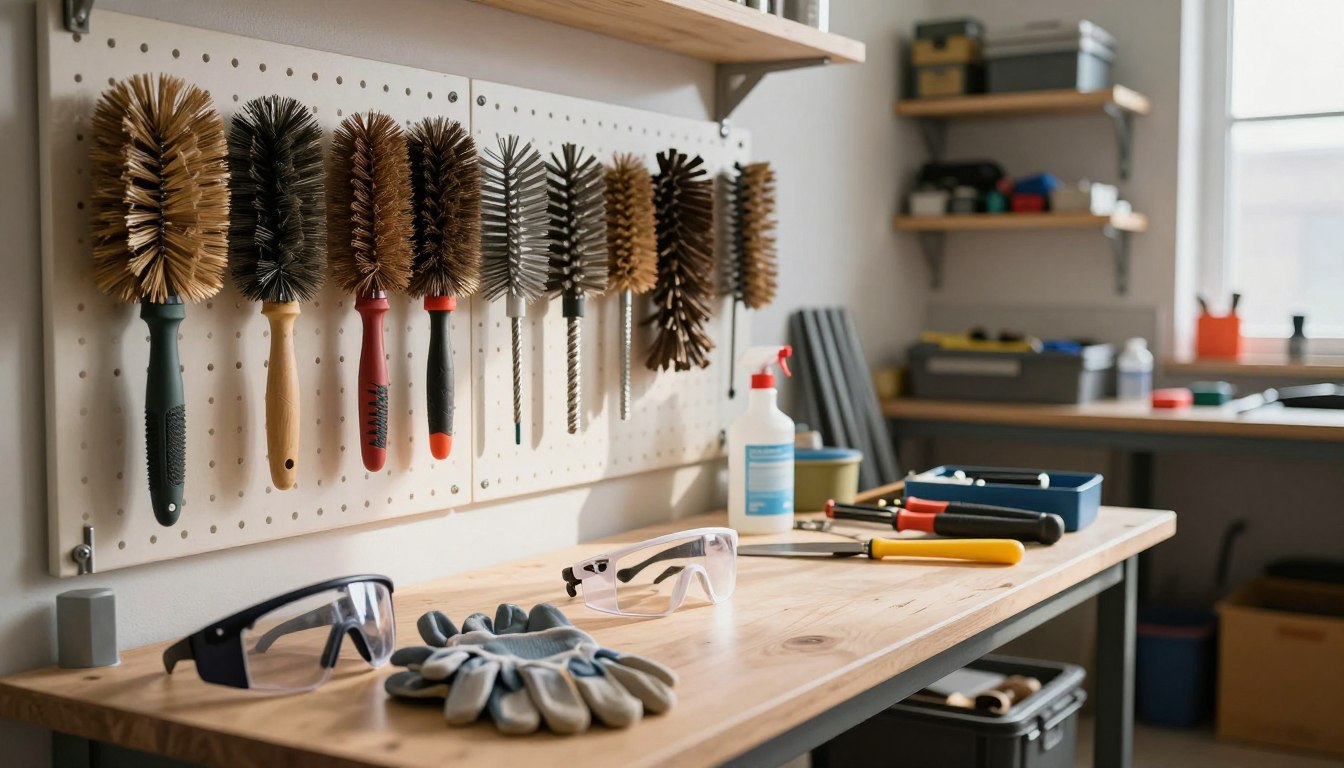
A well-organized workshop featuring a wire brush storage area. In the foreground, several wire brushes hang neatly on a pegboard, showcasing various sizes and wire twist options, arranged by type for easy access. The middle ground includes a sturdy work table cluttered with safety equipment, such as goggles, gloves, and a cleaning solution bottle. In the background, there are shelves filled with tools and equipment, with soft, diffused natural lighting streaming through a window, casting gentle shadows. The atmosphere is professional and practical, highlighting the importance of safety and maintenance in using wire brushes. The image is shot from an angle that emphasizes both the tools and the work environment, creating a sense of order and readiness.
By following these safety and maintenance tips, you can use your round wire brush effectively and safely.
Conclusion
Choosing the right round wire brush is key for effective and safe work in many fields. We've looked at how arbor size and wire twist matter for different tasks.
The round wire brush is a handy tool, coming in various sizes and wire types. Knowing about twisted wire brushes helps us pick the best one for our needs.
For more details on wire brushes, check out https://www.iqsdirectory.com/articles/brush/wire-brush.html. Thinking about arbor size, wire twist, and material ensures our brushes work well and last long.
FAQ
Why is the arbor size so critical when we are selecting a round wire brush for our power tools?
The arbor size is key for safety and performance. It must match the tool's spindle, like a DEWALT angle grinder or a Jet bench grinder. The wrong size can cause vibrations, damage, or the brush detaching.
We often use adapters or reducer bushings for a good fit.
What are the main material differences we should consider in an industrial wire brush?
We choose between carbon steel, stainless steel, and brass based on the workpiece. Carbon steel is good for iron and steel. Stainless steel prevents rust on stainless or aluminum.
Brass is best for non-sparking or delicate surfaces. High-quality brands like Weiler ensure durability under pressure.
When do we recommend using a heavy duty wire brush with a knotted twist design?
For tough tasks, like welding prep or removing thick slag, a knotted design is best. It offers the needed rigidity for aggressive cleaning. For lighter tasks, a standard crimped brush is better for its flexibility and smooth finish.
How do we choose the right wire brush for rust removal on large metal surfaces?
For big corrosion, a heavy duty wire brush with high wire density is best. It cleans aggressively by touching more surface area. A wide face width is also important for a Milwaukee fuel grinder to cover more area efficiently.
Is there a specific wire brush for cleaning delicate or hard-to-reach areas?
Yes. For precision, we use a wire brush with a wooden handle. Brands like Osborn make high-quality manual brushes for tight spots or sensitive areas. They're also great for light cleaning tasks.
What safety protocols should we follow when using a wire brush for welding or fabrication?
Safety first. Wear a full face shield and heavy-duty gloves to prevent injuries from loose wires. Check the Maximum RPM rating of our Forney brushes to match our tool's speed. Regularly check for wear to prevent accidents.
Why should we use a dedicated stainless steel wire brush for certain projects?
Using a dedicated stainless steel brush prevents contamination. Using a carbon steel brush on stainless can lead to rust. For critical projects, keep stainless brushes separate and labeled to maintain metal integrity.
Contact
Leave your information and we will contact you.


