English
Twisted Wire Brush: How to Specify Wire Gauge and Twist Style
Created on 03.16
Finding the right tool for industrial cleaning starts with knowing its basics. Choosing the right specs can be tricky with so many options. It's crucial to pick the right tool for your task to ensure long-term durability and safety.
Understanding the diameter and twist of the metal is key. A helical core patentshows core thickness can range from 0.02 to 0.30 inches. This makes the twisted wire brush strong and rigid for heavy use.
twisted wire brush
Many overlook the winding style's importance. Yet, it affects how the tool interacts with the surface. Picking the right thickness prevents damage while effectively removing debris. Let's see how these details impact your industrial projects.
We want to help you choose the best cleaning tools for your needs. Using the right materials makes tough jobs easier and more efficient. Specifying the correct gauge is the first step to professional results.
Key Takeaways
- Select the correct gauge to avoid damaging sensitive surface areas.
- Understand how winding styles impact the aggressiveness of the tool.
- Core diameters typically range between 0.02 and 0.30 inches for stability.
- Helical designs improve the overall structural integrity of the gear.
- Proper tool selection significantly increases worker safety and efficiency.
- Compressed coils help the equipment resist deflection during heavy use.
Understanding Twisted Wire Brush Construction and Components
To understand the value of twisted wire brushes, we need to look at how they are made. These brushes are a special kind of industrial wire brush. They are made for certain jobs and offer benefits that other brushes don't.
What Makes a Twisted Wire Brush Different from Other Industrial Wire Brushes
Twisted wire brushes stand out because of their twisted design. This design gives them a stronger cleaning power than straight wire brushes. They are great for jobs where you need to clean and smooth surfaces well.
A close-up view of a twisted wire brush construction, showcasing the intricate interlacing of metallic bristles, with a focus on varying wire gauges and twist styles. In the foreground, highlight the fine details of the twisted wires, glinting under bright, diffused lighting to reveal their texture and sheen. In the middle ground, display a set of wire brushes arranged at different angles, emphasizing their size, shape, and construction methods. The background should be a softly blurred workshop environment, hinting at tools and materials used in brush production, creating a professional atmosphere. Aim for a sharp, high-resolution image with a shallow depth of field that emphasizes the twisted wire detail while maintaining a clean and informative look.
Anatomy of a Twisted Wire Brush: Stem, Fill Material, and Twist
A twisted wire brush has three main parts: the stem, the fill material (wire), and the twist. The stem holds the brush together. The fill material is the wire that cleans or deburrs. The twist is how the wire is arranged, affecting how well the brush works.
The main parts of a twisted wire brush are:
- The stem, which is the base
- The fill material, which is the wire for cleaning or deburring
- The twist, which affects the brush's effectiveness
Common Wire Materials: Carbon Steel, Stainless Steel, and Brass
The type of wire used is key to a twisted wire brush's performance and life. Common wires are carbon steel, stainless steel, and brass. Each has its own strengths and uses.
Material | Characteristics | Applications |
Carbon Steel | Strong, flexible | General cleaning, deburring |
Stainless Steel | Resists corrosion, durable | Where corrosion is a problem |
Brass | Soft, non-sparking | Safe for explosive areas or delicate surfaces |
Knowing how twisted wire brushes are made helps you pick the right one for your needs. Look at the stem, fill material, twist, and wire type. This ensures your brush works best for its job.
How to Specify Wire Gauge for Your Twisted Wire Brush
Choosing the right wire gauge for twisted wire brushes is key for the best results. The gauge affects how well the brush works, how long it lasts, and what tasks it's good for.
Wire Gauge Measurement Systems Explained
The American Wire Gauge (AWG) system is the most common way to measure wire gauge. It works by using a number that shows how thick or thin the wire is. A lower number means the wire is thicker, and a higher number means it's thinner.
Understanding wire gauge measurement is crucial for picking the right twisted wire brush. It's not just about the number; the wire's material and how it's made also matter a lot.
Standard Wire Gauge Ranges: From .008" to .020" and Beyond
Twisted wire brushes come in many wire gauges, from .008" to .020" and more. The gauge you choose depends on what you're cleaning or preparing and the finish you want.
Wire Gauge | Diameter (inches) | Typical Applications |
.008" | 0.008 | Delicate surface preparation, fine polishing |
.012" | 0.012 | General cleaning, deburring |
.020" | 0.020 | Heavy-duty cleaning, rust removal |
How Wire Diameter Impacts Cutting Action and Surface Finish
The wire's diameter changes how it cuts and the finish it leaves. Thicker wires are good for tough jobs like removing rust. Thinner wires are better for fine work and won't scratch the surface.
Fine Wire Gauges for Delicate Surface Preparation
Fine wire gauges, like .008" or .010", are great for gentle cleaning. They won't harm the surface, making them perfect for when you need a smooth finish.
Heavy Duty Wire Gauges for Aggressive Rust Removal
For tough jobs like removing rust, use heavier wire gauges like .020" or thicker. These wires are strong and can handle hard cleaning, making them ideal for heavy duty wire brush tasks.
Selecting the Right Twist Style Configuration
To get the best results with a twisted wire brush, knowing the different twist styles is key. The twist style greatly affects how well the brush works in different tasks.
Choosing between a single stem or double stem twisted wire brush is important. Single stem twisted wire brushes are great for detailed work. They help with gentle cleaning in tight spots.
Single Stem Twisted Wire Brushes for Precision Work
Single stem brushes are perfect for tasks needing a lot of precision. They're used in places where detailed work is a must.
Experts say, "Single stem twisted wire brushes are crucial in many jobs. They offer flexibility and precision."
"The right twist style can make all the difference in achieving the desired surface finish."
Double Stem Twisted Wire Brushes for Stability and Durability
Double stem twisted wire brushes are more stable and durable. They're good for tough tasks and heavy-duty jobs.
Characteristics | Single Stem | Double Stem |
Precision | High | Moderate |
Stability | Moderate | High |
Durability | Moderate | High |
Standard Twist vs. Tight Twist: Understanding Density Differences
The twist's density is also important. Standard twist is good for everyday use. Tight twist is denser and better for tough cleaning.
Think about what you need for your task. Tight twist is great for removing tough rust or debris.
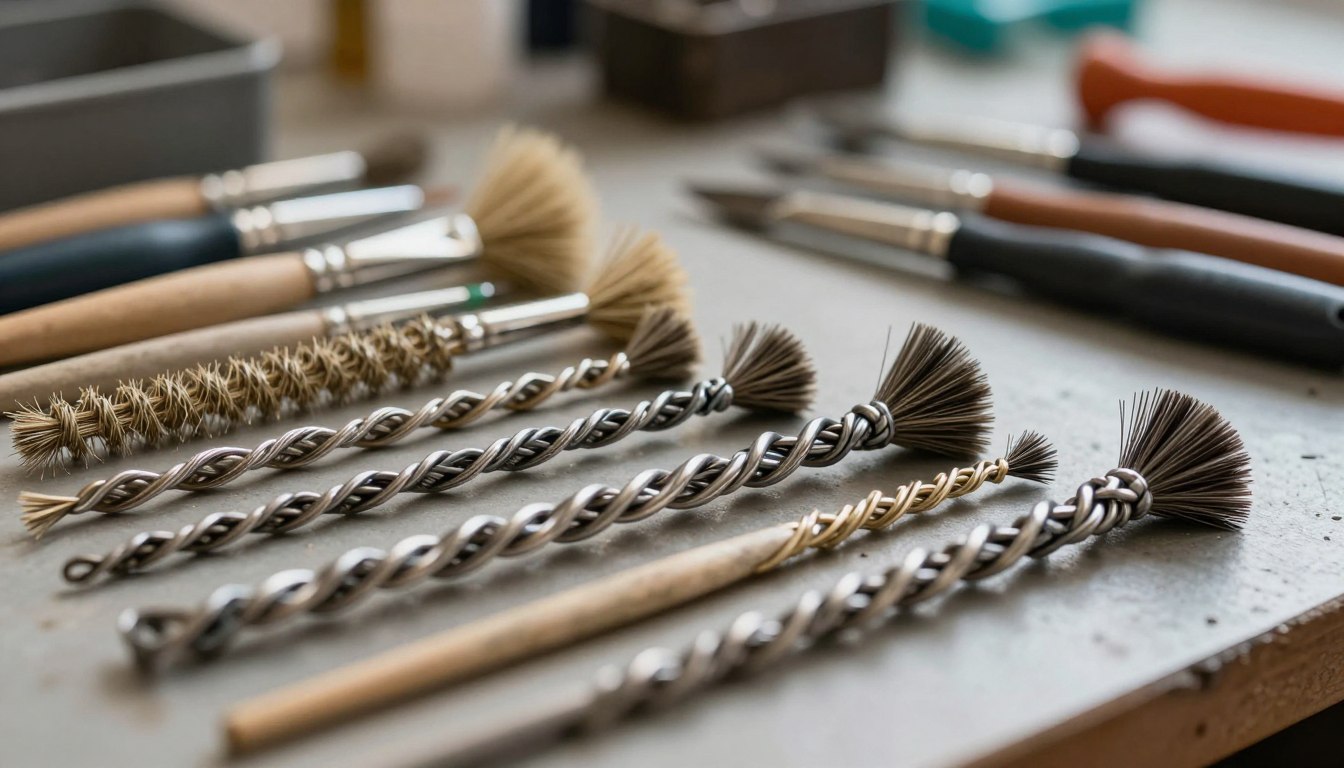
A close-up view of various twisted wire brush configurations, showcasing a range of wire gauges and twist styles. In the foreground, highlight several brushes with different twisted wire arrangements, displaying intricate details of the bristles that catch the light. The middle layer should feature a blurred workbench filled with tools and materials used for brush manufacturing, creating a sense of context and craftsmanship. In the background, gentle soft lighting enhances the overall mood, emphasizing the textures and colors of the wire. The atmosphere should feel industrious yet polished, capturing the essence of precision in selecting the right twist style configuration for specialized applications. The image should be well-composed with a slightly overhead angle to reveal the depth of the brush structures.
How Twist Length Affects Reach and Flexibility
The twist's length matters too. Longer twists reach further and are more flexible. They're best for deep or complex areas.
Trim Length Specifications and Their Applications
The trim length is key for the right finish. Different lengths are for different tasks, from fine polishing to heavy cleaning.
By picking the right twist style, you can make your twisted wire brush work better. This leads to better results in your specific task.
Matching Specifications to Your Cleaning and Preparation Needs
Choosing the right twisted wire brush is key. You need to know how its specs match your needs. The right brush makes a big difference in many industrial tasks.
Wire Brush for Cleaning Metal Surfaces: Optimal Combinations
For cleaning metal, wire gauge and twist style matter a lot. A twisted wire brush for rust removal needs a coarser wire to get rid of rust. A .020" wire diameter is great for tough rust jobs.
But for lighter cleaning or thinner metals, a finer wire like .008" is better. It won't damage the surface. The twist style also affects cleaning; a tight twist is aggressive, while a standard twist balances cleaning and protection.
Specifications for Welding Prep and Slag Removal
For welding prep and slag removal, a twisted wire brush for welding prep is needed. Use a brush with strong wire like carbon steel or stainless steel. The wire gauge should be coarse enough to remove slag but not too coarse to damage the metal.
A common choice is a brush with a .012" to .016" wire diameter. The twist should be dense for slag and spatter removal. A double stem brush adds stability and durability for these tough tasks.
Surface Preparation Requirements for Painting and Coating
For painting and coating, you need a clean, smooth surface. A twisted wire brush for surface preparation removes dirt and minor rust. For painting, a finer wire gauge is best to get a smooth finish.
Application | Wire Gauge | Twist Style |
Aggressive Rust Removal | .020" | Tight Twist |
Welding Prep | .012" - .016" | Standard Twist |
Surface Prep for Painting | .008" - .012" | Standard Twist |
Deburring Applications and Wire Selection Guidelines
For deburring, the wire brush choice depends on the material and the deburring needed. Softer materials need finer wire to avoid damage. Harder materials can use coarser wire.
The twist style and density also matter for deburring. A tighter twist is better for complex shapes.
Working with Manufacturers and Suppliers on Custom Specifications
If standard brushes don't fit your needs, custom specs can help. Share the details of your application with manufacturers. They can make a brush that meets your exact needs.
This way, you get a brush that's perfect for your task. It improves efficiency and effectiveness.
Conclusion
We've looked into why choosing the right wire gauge and twist style for twisted wire brushes is key. They are versatile and work well in many industrial settings. Knowing how they are made and what they're made of helps us pick the best one for our needs.
Twisted wire brushes are great for many tasks, from cleaning to preparing surfaces. For more details on twisted wire brushes and their uses, check out Bolex Brushes' guide. It offers a deep dive into their benefits and uses.
FAQ
What exactly makes a twisted wire brush different from other types of industrial wire brushes?
A twisted wire brush is unique because of its construction. The fill material is twisted between two or more stem wires. This design lets us clean areas that other brushes can't reach, like inside diameters and tight spots.
How do we determine the best wire gauge for a heavy duty wire brush application?
Choosing the right wire gauge depends on the job's needs. For tough cleaning, we use thicker gauges like .014" or .020". These sizes are more aggressive. For lighter cleaning, finer gauges work better.
Which wire material should we select when using a wire brush for cleaning stainless steel surfaces?
For stainless steel, always choose a stainless steel twisted wire brush. Carbon steel is good for general cleaning, but it can leave deposits on stainless. This can lead to corrosion.
When should we choose a double stem design over a single stem configuration?
Single stem brushes are best for manual work or light cleaning. But for high-speed cleaning or deburring, a double stem brush is better. It's more stable and durable for tough tasks.
What are the benefits of using a specialized twisted wire brush for welding prep?
A dedicated twisted wire brush removes scale, oil, and oxides before welding. A tight-twist brush is great for this. It's stiff enough to remove tough slag and prepare the metal for welding.
How does trim length impact the performance of a twisted wire brush for metal cleaning?
Trim length affects the brush's stiffness and flexibility. Shorter lengths are stiffer for heavy tasks. Longer lengths are more flexible for irregular surfaces.
Can we request custom sizes and filaments from a twisted wire brush supplier?
Yes, you can customize twisted wire brushes with a reputable supplier. You can change the stem material and twist density. This is useful for specialized cleaning tasks.
Why is the "twist style" so important for industrial wire brushes?
The twist style affects the wire points' density. A standard twist is versatile, but a tight twist is better for heavy-duty cleaning. It keeps the brush's shape and power under pressure.
Contact
Leave your information and we will contact you.


