English
Nylon Wire Brush: When to Choose Nylon vs Steel (Checklist)
Created on 03.16
Ever felt lost in the tool aisle? Choosing the right cleaning tools for your project can be tough. It's not just about the work itself, but also about picking the right tools.
Stainless steel is strong, but it might be too harsh for some surfaces. That's where nylon comes in. It's gentle yet effective for removing tough grime without harming your surfaces.
nylon wire brush
We've made a checklist to help you pick the right tools for your needs. It ensures your surfaces stay safe and look great. Using nylon bristles might be the best choice for your next project.
Using the wrong tools can lead to expensive mistakes and damaged finishes. We aim to make your work smooth and stress-free. Let's dive into the details of these versatile scrubbing options.
Key Takeaways
- Compare synthetic and metallic options for better cleaning results.
- Identify which surfaces require a much softer touch.
- Prevent permanent scratches on delicate metal or wood finishes.
- Save money by avoiding accidental surface damage during maintenance.
- Learn when to prioritize heavy-duty strength over project safety.
- Understand the versatility of different abrasive materials in your workshop.
Understanding Nylon Wire Brushes and Their Properties
Nylon wire brushes are great for cleaning and preparing surfaces. They are versatile and work well for many tasks. This makes them perfect for both gentle cleaning and tough surface prep.
What Makes Nylon Bristles Unique
Nylon bristles are special because they are both flexible and strong. They can handle a lot of stress without breaking. This makes them great for tasks that need both care and power.
Their flexibility lets them get into tight spots. Stiffer brushes can't reach these areas as well.
Common Types of Nylon Brushes We Recommend
There are many types of nylon brushes, each for different jobs. Some common ones include:
- Nylon abrasive brushes for heavy-duty cleaning
- Nylon wheel brushes for detailed work
- Nylon cup brushes for surface preparation
These brushes are made to give the best results in various tasks. They work well for cleaning and deburring.
Type of Nylon Brush | Application | Key Feature |
Nylon Abrasive Brush | Heavy-duty cleaning | High abrasion resistance |
Nylon Wheel Brush | Detailed work | Precision and flexibility |
Nylon Cup Brush | Surface preparation | Effective debris removal |
Durability and Flexibility Benefits
Nylon wire brushes are very durable. They can handle tough environments and still work well. Their flexibility also means they can be used on different surfaces without damaging them.
This makes them perfect for tasks that need both strength and gentleness.
Knowing about nylon wire brushes helps users choose the right tool for their needs. Whether for industrial use or delicate tasks, nylon wire brushes are a reliable choice.
Steel Wire Brushes: Characteristics and Applications
Steel wire brushes are tough and perfect for tough cleaning jobs. They can handle a lot of use and are key in many fields like construction, making things, and fixing cars.
Steel Bristle Composition and Strength
These brushes are made from strong steel or other materials. This makes them great for hard work. The bristles are twisted or crimped to make them even better at cleaning.
Key characteristics of steel bristles include:
- High tensile strength
- Resistance to wear and tear
- Ability to withstand high temperatures
A detailed close-up of a steel wire brush, showcasing its bristle texture and metallic sheen. The brush is positioned in the foreground against a blurred workshop background filled with tools and rustic surfaces. Soft, diffused natural light illuminates the scene, creating subtle reflections on the steel bristles while casting gentle shadows. The angle is slightly tilted, emphasizing the brush’s intricacies and the interplay of light and shadow. The atmosphere conveys a sense of industrial strength and functionality, making the brush appear as an indispensable tool. The color scheme is dominated by steel grays and hints of rusty browns, giving a realistic and relatable feel to the image.
Where Steel Brushes Excel
Steel wire brushes are top-notch for tough cleaning and getting surfaces ready. They're great at taking off rust, scale, and old paint from metal. This makes the metal ready for welding, painting, or other treatments.
Application | Description |
Rust Removal | Effectively removes rust from metal surfaces |
Surface Preparation | Prepares surfaces for welding, painting, or coating |
Deburring | Removes burrs and sharp edges from metal parts |
Safety Concerns and Limitations
Steel wire brushes are very good but have safety issues. The main worry is bristles breaking off and hurting your eyes. Always wear goggles and gloves when using them.
Also, these brushes can scratch or harm some surfaces. So, picking the right brush for the job is very important.
Key Differences Between Nylon and Steel Wire Brushes
Choosing between nylon and steel wire brushes depends on your project's needs. Consider the surface, cleaning level, and environment. Each has its own strengths.
Material Hardness and Surface Impact
Nylon brushes are softer and safer for delicate surfaces. They're perfect for gentle cleaning tasks.
Steel brushes are harder and more abrasive. They can tackle tough grime but might harm softer surfaces.
Chemical Resistance Comparison
Nylon brushes resist chemicals well, making them great for certain cleaning solutions.
Steel brushes, though, can rust and corrode, mainly if not coated or used in harsh chemicals.
Temperature Tolerance and Environmental Performance
Nylon brushes can't handle high heat well. They might deform or degrade at high temperatures.
Steel brushes, on the other hand, can handle much hotter temperatures. They're good for high-temperature cleaning.
Cost Differences and Lifespan
Nylon brushes are cheaper but need replacing often.
Steel brushes cost more but last longer. They're a better value over time.
Characteristics | Nylon Wire Brushes | Steel Wire Brushes |
Material Hardness | Soft, less abrasive | Hard, more abrasive |
Chemical Resistance | Generally more resistant | Can be susceptible to rust and corrosion |
Temperature Tolerance | Lower temperature tolerance | Higher temperature tolerance |
Cost and Lifespan | Less expensive upfront, shorter lifespan | More expensive upfront, longer lifespan |
When to Choose a Nylon Wire Brush for Your Project
Nylon wire brushes are great for projects that need a gentle touch. They are perfect for tasks that require precision and care. This is to avoid damaging the surface being cleaned or worked on.
Delicate and Soft Surface Cleaning
Nylon wire brushes are perfect for cleaning delicate surfaces without causing damage. They are great for surfaces that are soft or easily scratched.
Automotive and Paint Protection
In the automotive world, nylon wire brushes are used to clean parts without harming the paint or surface finish. They are gentle on automotive paints and coatings, making them a top choice for detailing work.
For more insights on the differences between wire brushes and nylon abrasive brushes, you can refer to our detailed comparison guide on Empire Abrasives.
Wood and Composite Materials
Nylon brushes are also effective for cleaning wood and composite materials. They remove dirt and debris without scratching the surface, keeping the material intact.
Electronics and Precision Equipment
For electronics and precision equipment, nylon wire brushes are used for gentle cleaning. They remove dust and other contaminants without damaging sensitive components.
Wet Environments and Chemical Exposure
Nylon wire brushes are resistant to certain chemicals and can be used in wet environments. This makes them suitable for a variety of industrial applications.
Food Processing and Kitchen Use
In food processing and kitchen environments, nylon brushes are preferred. They resist corrosion and can withstand cleaning chemicals.
Outdoor and Marine Applications
Nylon wire brushes are also used in outdoor and marine applications where moisture is common. They resist corrosion and maintain their effectiveness in these conditions.
Non-Scratching Requirements
One of the key benefits of nylon wire brushes is their non-scratching property. This makes them ideal for applications where surface finish is critical.
When Steel Wire Brushes Are the Better Choice
Steel wire brushes are top picks for tough cleaning and getting surfaces ready. They are strong and work well for many hard tasks.
Heavy Rust and Corrosion Removal
Steel wire brushes are great at taking off heavy rust and corrosion from metal. Their tough bristles can handle hard scrubbing. This makes them perfect for fixing surfaces that are badly damaged.
In fixing old machines or keeping buildings in good shape, steel wire brushes are key. They help remove rust and corrosion, making things last longer.
Concrete and Masonry Cleaning
Steel wire brushes are also great for cleaning concrete and masonry. They get rid of dirt, grime, and old coatings. This makes the surface ready for new things or just looks better.
They work well because they can scrub off tough stains and stuff without hurting the surface underneath.
Weld Spatter and Metal Preparation
Steel wire brushes are also key for getting metal ready, like removing weld spatter and making edges smooth. They make sure metal is clean and ready for more work or finishing.
This is very important in making things and building projects. The quality of welds and how clean the metal is matters a lot.
Situations Where Nylon Won't Cut It
There are times when nylon brushes aren't enough because they're not as rough or durable. Steel wire brushes are a better choice then.
For example, when dealing with really corroded surfaces or needing a stronger clean, steel wire brushes are better. You can find out more about the differences between wire brushes and nylon abrasive brushes in our detailed comparison guide on Empire Abrasives.
Application | Steel Wire Brush | Nylon Brush |
Heavy Rust Removal | Excellent | Limited |
Concrete Cleaning | Very Effective | Less Effective |
Weld Spatter Removal | Ideal | Not Suitable |
Your Complete Nylon vs Steel Wire Brush Decision Checklist
Choosing between nylon and steel wire brushes depends on several key factors. We've outlined these in our comprehensive checklist. To make a good choice, think about your project's details, like the surface material and environmental conditions.
Surface Material Questions to Ask Yourself
First, consider the surface material when choosing between nylon and steel wire brushes. Soft surfaces need gentle cleaning, while tough surfaces can handle more.
- Is the surface made of a soft material that could be damaged by a steel brush?
- Is the surface heavily rusted or corroded, requiring the heavy-duty cleaning of a steel brush?
Project Scope and Cleaning Intensity
The size of your project and how much cleaning it needs are key. Think about the area's size and the grime or rust level.
- Are you cleaning a large area that requires a more efficient scrubbing brush?
- Does the job demand a high level of precision and control, suggesting a nylon brush might be more appropriate?
Environmental Conditions Assessment
Environmental factors, like chemicals or extreme temperatures, affect your wire brush's performance and life.
- Will the brush be used in a wet environment or exposed to chemicals that could affect its durability?
- Are there temperature fluctuations that could impact the brush's material properties?
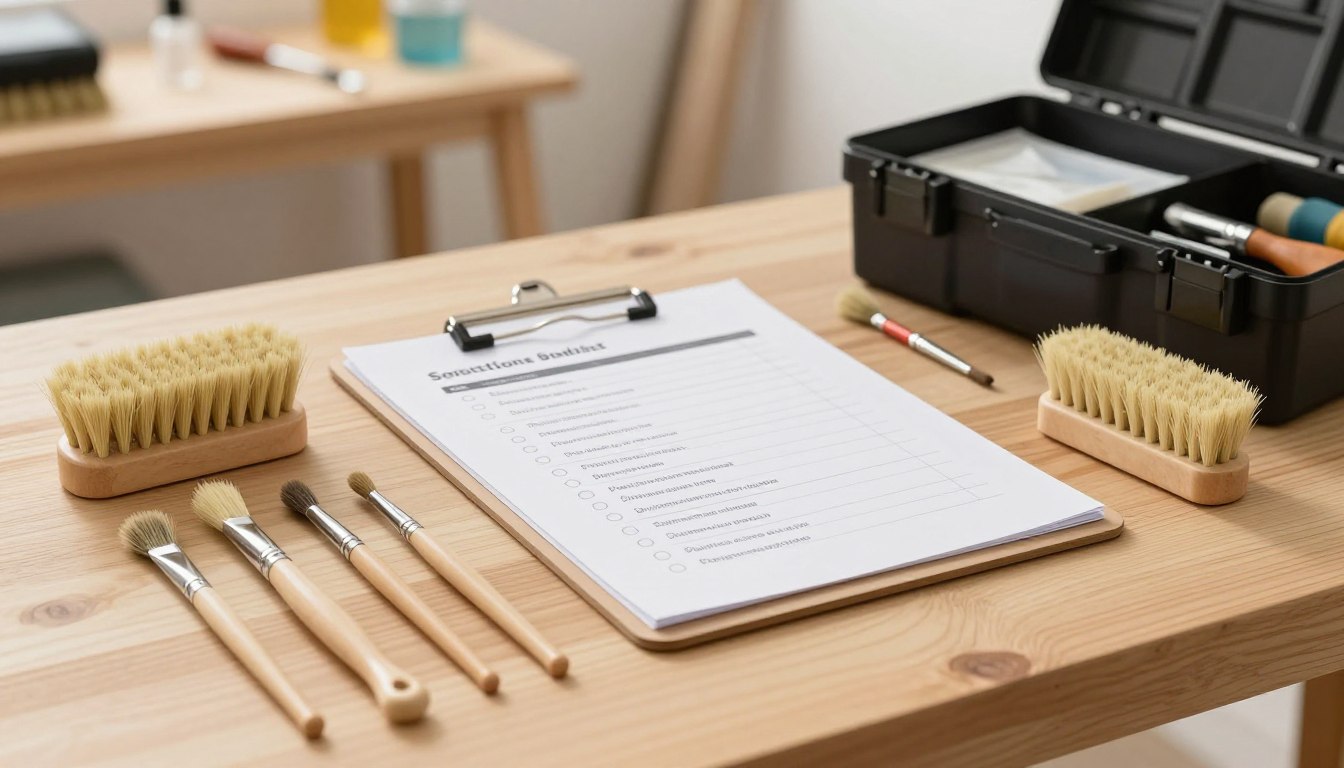
A detailed nylon brush selection guide displayed on a clean wooden workspace. In the foreground, various nylon brushes of different sizes and shapes are arranged neatly alongside a few steel brushes for comparison. In the middle, a clipboard with an illustrated checklist, highlighting key features like stiffness, durability, and applications, is placed next to an open toolbox. The background features a soft focus of a well-lit workshop, with tools and materials subtly enhancing the craftsmanship atmosphere. The scene is illuminated by warm, natural lighting, giving it a welcoming feel. The angle is slightly above to capture all elements effectively, providing a professional and informative mood perfect for an instructional article.
Safety and Finish Requirements
Safety and the desired finish are also important. The wrong brush can fail to meet your needs and pose safety risks.
- Is there a risk of the brush bristles breaking off and causing injury or damage?
- Does the project require a specific finish that could be compromised by using the wrong type of brush?
Quick Reference Selection Guide
Our quick reference guide helps simplify your decision. It outlines the main differences and uses of nylon and steel wire brushes.
Brush Type | Ideal Use | Surface Compatibility |
Nylon Wire Brush | Delicate cleaning, wet environments, chemical exposure | Soft surfaces, non-ferrous metals |
Steel Wire Brush | Heavy rust removal, concrete cleaning, weld preparation | Tough surfaces, ferrous metals |
Conclusion
Choosing the right wire brush is key to a successful cleaning or surface prep job. Whether it's a nylon wire brush for gentle surfaces or a steel wire brush for tough tasks, knowing the differences is important.
We've covered the main differences between nylon and steel wire brushes. These include their durability, flexibility, and how well they handle chemicals and heat. Think about the surface you're working on, the size of your project, and the environment. This helps you pick the best cleaning brush for your needs.
Use our detailed checklist to find the perfect wire brush for your task. This will boost your cleaning or surface prep work. It also helps your nylon wire brush or other cleaning tools last longer.
FAQ
What is the main advantage of using a nylon wire brush instead of a steel one?
A nylon wire brush is great because it cleans without damaging the material. It's non-sparking and non-marring, unlike steel brushes. Osborn's nylon brushes are top-notch because they last long and are gentle on surfaces.
Can we use a nylon wire scrub brush on automotive surfaces?
Yes, they're perfect for cleaning engines, wheels, and upholstery. Nylon is soft and won't scratch paint or chrome. Pairing them with Meguiar's products ensures a smooth finish without scratches.
Is a nylon brush safe for food preparation areas and kitchens?
Yes, they're safe for kitchens. Carlisle FoodService Products makes food-safe nylon brushes. They resist bacteria and chemicals, making them safe for cleaning cast iron or industrial ovens.
When should we stick to a steel wire brush instead of nylon?
Steel wire brushes are better for tough jobs. They're needed for heavy rust, thick slag, or preparing pipes for welding. Weiler Corporation and Lincoln Electric make reliable steel brushes for these tasks.
How does a nylon wire brush perform in wet or chemically harsh environments?
Nylon brushes are great in wet conditions. They never rust and resist many solvents and oils. This makes them perfect for marine and chemical tank cleaning.
Can we use a nylon wire brush on wood projects?
Yes, they're great for wood. They reveal the grain in softwoods and remove old finishes without harming the wood. Steel brushes can leave metal particles that rust and discolor wood. Nylon brushes are the best choice for furniture restoration.
Are nylon brushes effective for cleaning electronics and precision equipment?
Yes, they're gentle on sensitive electronics. Many nylon brushes have anti-static properties. This is important for cleaning circuit boards and delicate machinery without damage.
What is the temperature tolerance of a typical nylon wire scrub brush?
Nylon brushes can handle up to 250°F before softening. For higher heat, like cleaning hot welds, use a steel brush or a 3M nylon brush with silicon carbide.
Contact
Leave your information and we will contact you.


