English
Wire Bristle Brush: Trimming, Stiffness and Surface Safety
Created on 03.16
We often face tough cleaning jobs that need more than a simple sponge or plastic scraper. Choosing high-quality metal tools helps us tackle rust or old paint without harming the base layer. These tools come in many forms, each suited for a specific level of stiffness.
Trimming the steel ends right ensures we get the best reach in tight spots. We aim to keep our surfaces safe while getting a polished finish. Knowing how to use a heavy-duty wire brush saves time and effort on every project.
wire bristle brush
Using the right gear protects the material underneath from unwanted marks. We aim for a balance between power and precision to keep everything looking exceptionally clean. Let's explore how these scrubbing tools enhance our daily work.
Key Takeaways
- Proper fiber length improves scrubbing power and control.
- Stiffness levels vary based on the specific metal used.
- Surface safety depends on the amount of pressure we apply.
- Regular maintenance extends the life of your equipment significantly.
- Selecting the right density prevents deep scratches on soft metals.
1. Understanding Wire Bristle Brush Types and Materials
The world of wire bristle brushes is full of variety. Each type and material is made for different uses and surfaces. Knowing these differences helps you pick the right brush for your needs.
Stainless Steel Wire Brushes for Rust-Resistant Applications
Stainless steel wire brushes are great for places where rust is a problem. They're made from top-quality stainless steel wires. These wires are durable and don't rust easily.
These brushes are perfect for areas with lots of moisture. They're used in places like the marine industry, food processing, and more. Here, keeping things clean and durable is key.
Brass Wire Brushes for Softer Surfaces
Brass wire brushes are good for softer surfaces. Their soft bristles won't damage delicate areas. They're great for cleaning surfaces that could get scratched easily.
Carbon Steel Wire Brushes for Heavy-Duty Cleaning
Carbon steel wire brushes are strong and last a long time. They're made from high-carbon steel wires. These wires can handle tough cleaning jobs.
They're perfect for removing heavy rust, scale, and debris. They're built to withstand hard use.
Specialized Formats: Wire Wheel Brush, Wire Grill Brush, and Wire Scrub Brush
There are special wire bristle brushes for specific tasks. A wire wheel brush is for heavy-duty jobs and is often used with power tools. A wire grill brush cleans grill grates and cooking surfaces. It gets rid of food residue and grime.
A wire scrub brush is for scrubbing off tough grime and stains. It works on many surfaces.
2. Trimming Styles and Bristle Configurations Explained
The trimming style and bristle configuration of a wire bristle brush greatly affect its performance. When picking an industrial wire brush, knowing these details is key. It helps get the best results in cleaning, deburring, or surface prep tasks.
Trim Length and Its Impact on Performance
The trim length of a wire bristle brush changes its flexibility and aggressiveness. A longer trim length is more flexible and gentle, perfect for uneven surfaces or soft tasks. A shorter trim length is stiffer and better for tough jobs needing more force.
- Longer trim lengths for more flexibility and gentler applications
- Shorter trim lengths for increased stiffness and heavy-duty tasks
Crimped Wire vs. Straight Wire Trimming
Wire bristle brushes can have crimped or straight wire trimming. Crimped wire brushes have bent wires for a more aggressive clean. They're great for removing heavy rust or debris. Straight wire brushes give a smoother finish and are best for lighter cleaning or finer surfaces.
A detailed wire cleaning brush with metallic bristles, showcasing various trimming styles and bristle configurations. In the foreground, focus on the brush’s head with close-up details of individual wire bristles, highlighting their stiffness and density. The middle ground features a variety of brushes arranged artistically to illustrate different configurations, showcasing their unique shapes and sizes. In the background, a subtly blurred workshop setting creates an industrial atmosphere, with tools and workbenches hinting at practical usage. Employ soft, diffused lighting to enhance the textures and metallic sheen of the brushes, capturing their intricacies. The angle is slightly above, offering a comprehensive view that conveys a sense of professionalism and precision. The overall mood is informative and technical, suitable for a tutorial context.
Knotted and Twisted Wire Configurations
Some wire brushes feature knotted or twisted wires for enhanced cleaning. Knotted wire brushes are ideal for heavy-duty cleaning and deburring, effectively breaking down tough debris. Twisted wire brushes offer a more aggressive action, making them perfect for demanding surface preparation tasks.
Cup Brushes, End Brushes, and Wire Scratch Brush Designs
Wire bristle brushes come in many designs, like cup brushes, end brushes, and wire scratch brushes. Cup brushes clean and deburr large, flat surfaces or concave areas. End brushes are great for tight spaces or holes. Wire scratch brushes are versatile for general cleaning and surface prep.
- Cup brushes for large, flat surfaces or concave areas
- End brushes for tight spaces or deep holes
- Wire scratch brushes for general-purpose cleaning and surface preparation
3. Stiffness Factors: Matching Brush Hardness to Your Task
Choosing the right wire bristle brush hardness is key for the best results and to protect surfaces. We'll look at what makes a brush stiff and help you pick the best one for your job.
What Determines Wire Bristle Stiffness
Several things affect a wire bristle brush's stiffness. These include the wire's diameter and gauge, and the material's properties and strength.
Wire Diameter and Gauge Selection
The wire's diameter and gauge greatly influence its stiffness. A thicker wire diameter means a stiffer brush. On the other hand, a thinner wire is more flexible. The gauge, which measures thickness, also matters. A lower gauge means a thicker wire, making the brush stiffer.
Material Properties and Tensile Strength
The wire's material is also crucial for stiffness. Different materials have different tensile strengths, or how well they resist breaking under tension. Materials with high tensile strength, like stainless steel, make stiffer brushes. These are better for tough jobs.
Choosing Stiffness for Different Cleaning Tasks
Choosing the right stiffness for a wire bristle brush depends on the cleaning task. For gentle surfaces, a softer brush is safer. But for rough surfaces, a stiffer brush is needed for a good clean.
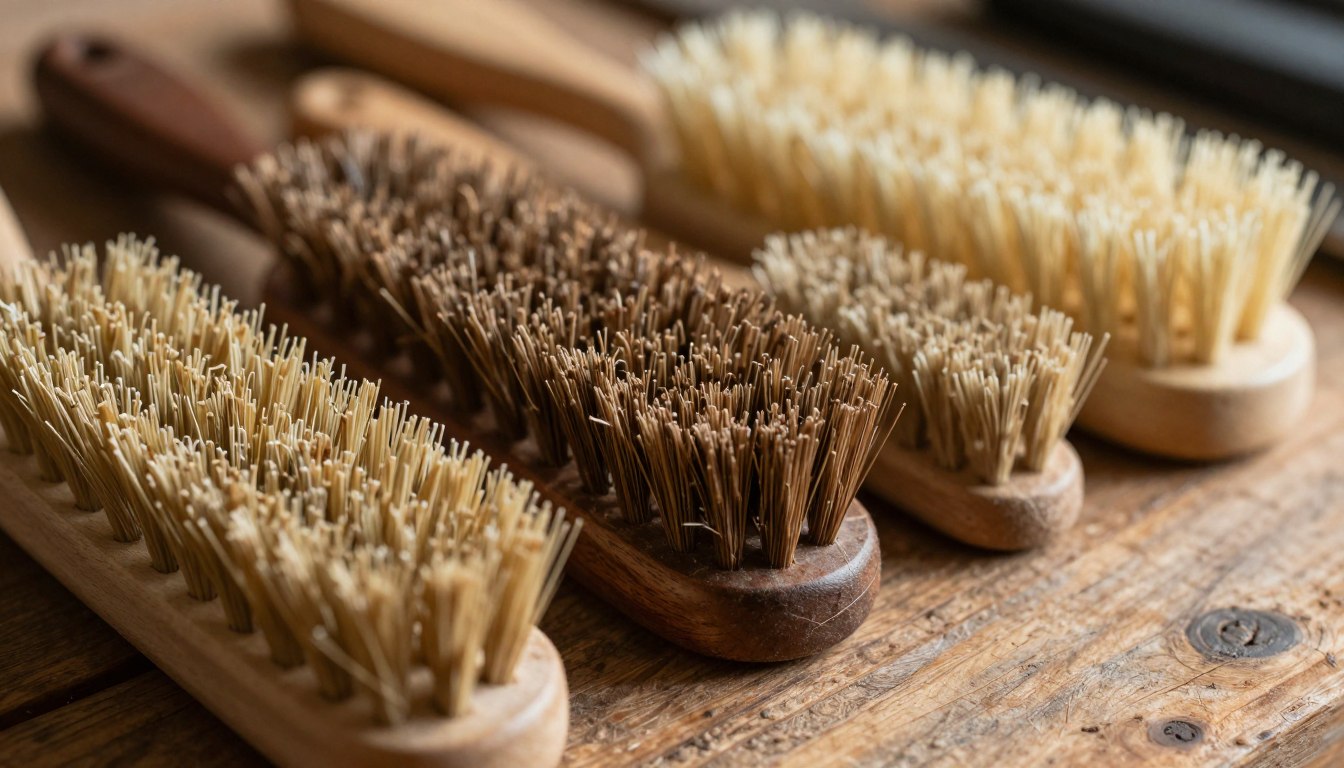
A close-up view of a variety of wire bristle brushes with differing stiffness levels, showcasing them on a rustic wooden surface. In the foreground, highlight a stiff brush with thick, coarse bristles, emphasizing its rugged texture and density. In the middle ground, feature brushes of medium stiffness with slightly curved bristles, and towards the back, include softer brushes with thin bristles for contrast. The lighting is warm and diffused, casting gentle shadows to enhance the texture details. Use a shallow depth of field to keep focus on the brushes while blurring the background. The atmosphere should convey a sense of craftsmanship and utility, suitable for a professional setting.
Industrial Wire Brush Stiffness for Heavy Applications
In industrial settings, where cleaning is tough, brush stiffness is very important. Industrial wire brushes are made to last through hard use. They are stiff and durable, perfect for heavy-duty cleaning.
4. Surface Safety: Protecting Materials While Using a Wire Cleaning Brush
When using wire brushes for cleaning, safety is key. The type of brush and how you use it can affect the surface you're cleaning.
Assessing Surface Compatibility Before Brushing
Before you start, check if the brush is right for the surface. Soft materials like aluminum or copper can get damaged by harsh brushes.
- Know the material you're cleaning.
- Pick the right brush type (like a brass wire brush for soft surfaces or a stainless steel wire brush for tough ones).
- Think about the finish you want.
Preventing Scratches and Surface Contamination
Using the right technique is key to avoid damage. For delicate surfaces, use a light touch and soft bristles.
Guidelines for Soft Metals and Painted Surfaces
For soft metals or painted surfaces, a brass wire brush is best. It has soft bristles. Make sure the brush is gentle to avoid removing paint.
Best Practices for Stainless Steel and Aluminum
For stainless steel, a stainless steel wire brush is best to avoid contamination. For aluminum, choose a brush that's not too harsh to prevent scratches.
Safe Operating Techniques and Personal Protection
Safe use of a wire brush is more than just picking the right one. For more safety tips, check our guide on safety precautions for wire brushes.
Using the brush at the right speed and with the right pressure is important. Always wear gloves and safety glasses to protect against debris.
5. Conclusion
Choosing the right wire bristle brush is key for many tasks. This includes cleaning, deburring, and surface preparation. We've looked at different types like stainless steel, brass, and carbon steel. Each is best for certain jobs.
It's important to know about the brush's trimming style, bristle setup, and stiffness. This helps match the brush to your task. Whether it's tough cleaning or gentle surface prep, the right brush makes a difference.
Remember, safety is crucial when using a wire brush. Make sure the brush is safe for the surface and use it correctly. This avoids scratches and keeps things clean. Our tips will help you pick the best brush for your needs.
With the right wire brush, you can achieve excellent results in many applications. We hope you use the knowledge gained to make informed choices. This will help you achieve the best results safely and effectively.
Frequently Asked Questions
Why should we choose a stainless steel wire brush over a brass wire brush for certain projects?
A stainless steel wire brush is recommended for stainless steel or aluminum surfaces. It helps prevent "after-rust" and cross-contamination. Conversely, a brass wire brush is suitable for softer metals. It is also non-sparking and less likely to damage surfaces compared to steel.
When is it best to use a knotted wire wheel brush instead of a crimped one?
For heavy tasks like removing weld slag or thick rust, a knotted wire wheel brush is the way to go. These brushes have twisted bristles for aggressive cleaning. Crimped brushes, with their finer finish, are better for light-duty cleaning.
How can we ensure our wire grill brush stays in good condition for the barbecue season?
To keep our wire grill brush in top shape, we clean it after each use. We also check for loose wires regularly. If the bristles are worn, it's time for a new brush to ensure safety and a clean grill.
What is the main advantage of using a wire scratch brush for detail work?
The wire scratch brush is perfect for precision work. Its narrow profile and ergonomic handle let us clean tight spots that bigger brushes can't reach. It's great for getting into small areas.
How do we select the correct wire gauge for a wire cleaning brush?
We choose the wire gauge based on the finish we want and the material's toughness. A thicker wire is stiffer and good for removing material fast. For smoother finishes, we use finer wire gauges to avoid deep scratches.
Are there specific safety precautions we should follow when using a wire wheel brush on a power tool?
Yes, safety is key! We wear face shields and heavy-duty gloves to protect against flying wires. We also check the brush's RPM rating to match our power tool's speed, keeping our workspace safe.
Contact
Leave your information and we will contact you.


